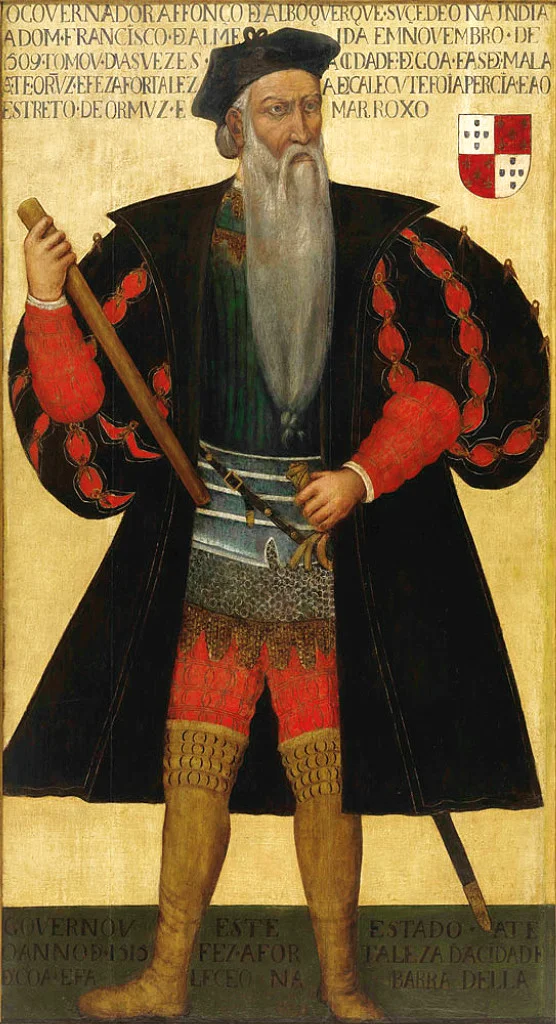
Quick Facts
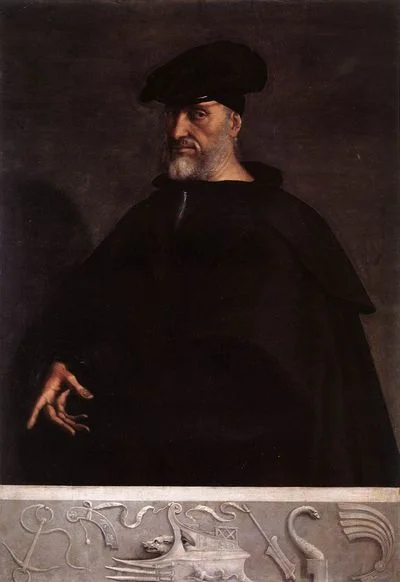
Lion of the Seas. Forged the Portuguese Empire across the Indian Ocean with sword and strategy.
Conversation Starters
Life Journey
Afonso de Albuquerque was born into a noble Portuguese family with close ties to the royal court. His birth came in a pivotal year that would see the fall of Constantinople to the Ottomans.
Young Afonso entered the service of King Afonso V of Portugal at the royal court, beginning his career as a courtier and soldier in service to the crown.
Albuquerque participated in the successful Portuguese conquest of the Moroccan city of Arzila, gaining his first military experience in North Africa.
Albuquerque served as a soldier in the Portuguese army, participating in various military campaigns and honing his skills as a commander.
In recognition of his service and abilities, Albuquerque was appointed to the Royal Council, gaining influence in Portuguese affairs of state.
Albuquerque embarked on his first voyage to India as part of a Portuguese fleet, beginning his career in the East that would make him famous.
King Manuel I appointed Albuquerque as the second Governor and Vice-Roy of Portuguese India, giving him authority over all Portuguese possessions in the East.
Albuquerque conquered the strategic island of Socotra and the port of Muscat, establishing Portuguese control over key points in the Arabian Sea.
Albuquerque captured the wealthy trading city of Ormuz at the entrance to the Persian Gulf, though he was forced to withdraw before fully consolidating control.
Portuguese forces under Albuquerque's overall command won a decisive naval victory at Diu against a combined Egyptian-Gujarati fleet, securing Portuguese dominance in the Indian Ocean.
Albuquerque conquered Goa from the Bijapur Sultanate, establishing it as the capital of Portuguese India. This became his greatest achievement and the center of Portuguese power in Asia.
Albuquerque conquered the strategic port of Malacca, giving Portugal control over the spice trade route between the Indian Ocean and the Far East.
Albuquerque established a network of fortresses and trade posts throughout the Indian Ocean, creating the infrastructure of the Portuguese maritime empire.
Albuquerque led an expedition to capture Aden at the entrance to the Red Sea, aiming to control the alternative spice trade route. Though the siege failed, it demonstrated Portuguese strategic ambitions.
Albuquerque returned to Ormuz and completed its conquest, building a fortress and establishing permanent Portuguese control over this crucial trading hub.
Afonso de Albuquerque died while sailing into Goa harbor, having learned that his enemies at court had turned the king against him. He died heartbroken but left behind a Portuguese empire spanning from Africa to Southeast Asia.