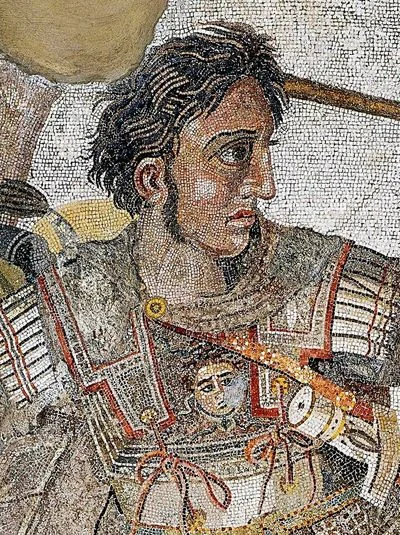
Quick Facts
Life Journey
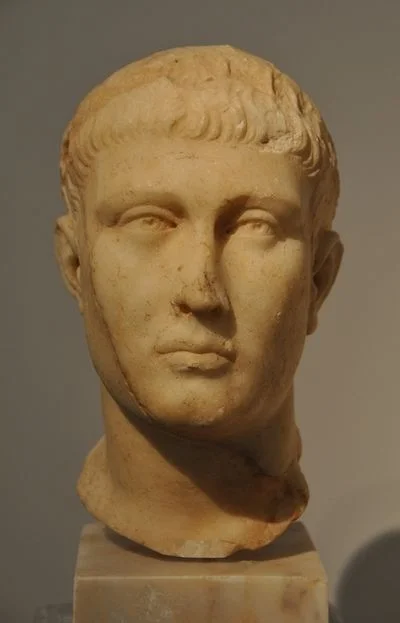
Alexander III was born to King Philip II and Olympias of Epirus. Legend says his birth coincided with the burning of the Temple of Artemis at Ephesus, and he was destined to conquer the known world.
Young Alexander tamed the wild horse Bucephalus when others had failed, impressing his father Philip. This horse would carry him through his greatest battles and become legendary alongside its master.
Philip hired Aristotle to tutor Alexander at the Temple of the Nymphs at Mieza. For three years, the philosopher taught him medicine, philosophy, religion, logic, and art, shaping his intellectual development.
While Philip campaigned against Byzantium, Alexander was left as regent. He crushed a Thracian rebellion and founded his first city, Alexandropolis, demonstrating early military and administrative talent.
Alexander commanded the left wing of the Macedonian army and led the decisive cavalry charge that routed the Sacred Band of Thebes. This victory established Macedonian hegemony over Greece.
After Philip II's assassination, Alexander became king at age 20. He swiftly executed potential rivals and secured the Macedonian throne, preparing to fulfill his father's dream of conquering Persia.
When Thebes revolted against Macedonian rule, Alexander captured and destroyed the city as a warning to other Greek states. Only temples and the house of the poet Pindar were spared.
Alexander led his army of 35,000 across the Hellespont, beginning his campaign against the Persian Empire. He visited Troy and honored his hero Achilles, claiming the legendary hero's shield.
In his first major battle against the Persians, Alexander defeated the satraps' army and narrowly survived a sword blow to the head. He sent 300 Persian panoplies to Athens as an offering.
Alexander encountered the famous knot that legend said would grant rule over Asia to whoever untied it. He reportedly cut it with his sword, declaring 'It makes no difference how it is loosed.'
Alexander defeated Darius III despite being heavily outnumbered. The Persian king fled, leaving his family captured. This victory opened the Levant to Macedonian conquest.
Alexander's most famous siege lasted seven months against the island fortress. He built a causeway to reach the walls, demonstrating his engineering genius and relentless determination.
After conquering Egypt, Alexander founded Alexandria, which would become the greatest city of the Hellenistic world and a center of learning for centuries. The city was named after him.
Alexander made a perilous desert journey to consult the Oracle of Ammon. The priests allegedly greeted him as the son of Zeus-Ammon, reinforcing his divine status and ambitious self-image.
Alexander's greatest tactical victory destroyed Darius's army and ended Persian resistance. Despite facing over 200,000 enemy troops, his brilliant cavalry tactics secured complete victory.
Alexander burned the Persian capital in revenge for Xerxes' burning of Athens. Shortly after, Darius III was murdered by his own satrap Bessus, making Alexander undisputed ruler of the Persian Empire.
Alexander married the Bactrian princess Roxana after conquering the region. The marriage was reportedly a love match, though it also served to pacify the local nobility.
Alexander crossed the Hindu Kush mountains to begin his Indian campaign. He would push the limits of the known world and encounter war elephants and fierce resistance from Indian kings.
Alexander's last great battle was against King Porus and his war elephants. Despite victory, the fierce resistance and his horse Bucephalus's death marked the limit of his eastern conquests.
Alexander died at age 32, possibly from typhoid fever, poisoning, or excessive drinking. His empire was divided among his generals. When asked to whom he left his empire, he reportedly said 'To the strongest.'