Quick Facts
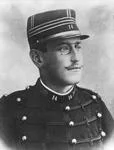
French Jewish army officer wrongly convicted of treason in history's most famous miscarriage of justice, whose case divided France and became a symbol of the fight against antisemitism and injustice.
Conversation Starters
Life Journey
Born Alfred Dreyfus on October 9, 1859, in Mulhouse, Alsace, to a prosperous Jewish textile manufacturing family. His childhood was comfortable, his family patriotic and assimilated.
Witnessed the Franco-Prussian War and the German annexation of Alsace. His family chose French citizenship and moved to Paris. Young Alfred vowed to serve France and recover the lost provinces.
Entered the prestigious École Polytechnique, one of the few paths for a Jew to rise in French society. He excelled academically and chose a military career in artillery.
Commissioned as a sub-lieutenant in the French artillery. His career advanced steadily. He was noted for intelligence and dedication, though some colleagues found him cold and overly ambitious.
Married Lucie Hadamard, daughter of a diamond merchant. Their marriage would prove unshakeable through the ordeals ahead. Lucie would fight for his freedom with tireless devotion.
Appointed to the French Army General Staff, a prestigious assignment. He was the only Jewish officer on the General Staff - a fact that made him a target.
On October 15, 1894, Captain Dreyfus was arrested and accused of passing military secrets to Germany. The evidence: a handwritten bordereau found in the German embassy. The accusation was false.
Convicted of treason in a secret court-martial based on forged documents and secret evidence not shared with the defense. Sentenced to life imprisonment and public degradation.
On January 5, 1895, in the courtyard of the École Militaire, Dreyfus was publicly stripped of his rank. His sword was broken, his insignia torn off. He cried out: 'I am innocent! Long live France!'
Transported to Devil's Island, a prison rock off French Guiana. For nearly five years he lived in solitary confinement, forbidden to speak, shackled at night, in tropical heat and disease.
Lieutenant Colonel Picquart discovered that Major Esterhazy was the real traitor. The army suppressed the evidence and transferred Picquart to Tunisia. But the truth had begun to emerge.
On January 13, 1898, Émile Zola published 'J'Accuse' in L'Aurore. The open letter accused the army of covering up the truth. France split into Dreyfusards and anti-Dreyfusards. The Affair had begun.
Brought back from Devil's Island for a new trial at Rennes. He arrived broken in health, prematurely aged, but his will unbroken. The world watched the proceedings.
Incredibly, convicted again 'with extenuating circumstances' - a legal absurdity. The world was outraged. Ten days later, President Loubet pardoned him. Dreyfus accepted to end his family's suffering.
The Court of Cassation annulled both convictions and declared Dreyfus innocent. He was reinstated in the army as a major and awarded the Legion of Honor in the same courtyard where he had been degraded.
At age fifty-five, Lieutenant Colonel Dreyfus served in World War I, commanding an ammunition column at Verdun. He was promoted and decorated. The old soldier served France to the end.
Alfred Dreyfus died on July 12, 1935, in Paris. He was seventy-five. To the end, he remained a patriot who loved the country that had wronged him. His case changed France forever.