Quick Facts
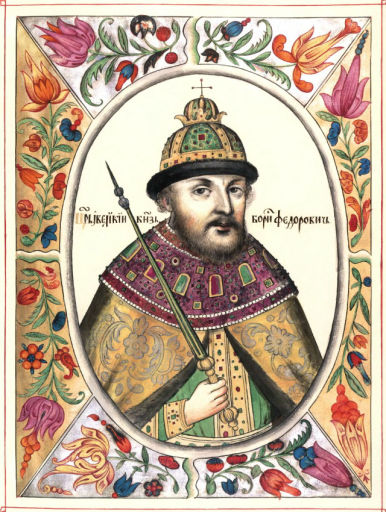
A pragmatic tsar who rose from court politics to rule Russia, confronting famine, rebellion, and dynastic crisis.
Conversation Starters
Life Journey
Born into a minor noble family connected to the Moscow court, he grew up amid shifting boyar rivalries. The centralizing reforms and wars of Ivan IV shaped the world he would navigate as an adult.
As a youth he was drawn into the orbit of the tsar’s court, where advancement depended on loyalty and patronage. Exposure to elite households taught him survival tactics in a violent political environment.
Ivan IV’s Oprichnina split the realm and unleashed purges that destroyed many boyar families. The atmosphere of suspicion impressed on him the value of cautious alliances and controlled information.
He gained responsibilities among the tsar’s servitors during years of war and internal repression. Networking with powerful clans helped him accumulate influence despite his comparatively modest lineage.
The devastating raid by Khan Devlet Giray burned much of Moscow and exposed vulnerabilities in border defense. The disaster reinforced elite demands for stronger state coordination and military logistics.
He cultivated relationships with senior families and court officials who managed the chancelleries of Muscovy. These ties later enabled him to place allies in posts that controlled taxes, justice, and appointments.
His sister Irina Godunova married Fyodor Ivanovich, linking the Godunovs directly to the ruling dynasty. The marriage created a platform for Boris to act as a chief adviser as succession questions loomed.
After Ivan IV died, the gentle and politically limited Fyodor I became tsar, elevating the influence of trusted counselors. Boris outmaneuvered rivals at court and emerged as the key decision-maker in practice.
He backed the elevation of the Russian Church to a patriarchate under Patriarch Job, strengthening Moscow’s religious independence. The move bolstered state legitimacy by aligning throne and altar more tightly.
The young Dmitry, last potential heir of Ivan IV’s line, died under disputed circumstances in Uglich. Allegations and rumors later haunted Boris, providing fuel for pretenders and foreign intrigue.
Policies associated with his administration restricted peasants’ ability to leave landlords, reinforcing a trend toward serfdom. The measures aimed to stabilize tax collection and service obligations during a strained economy.
After Fyodor I died without an heir, an assembly of estates endorsed Boris as tsar, ending the Rurikid dynasty. He used ceremonies and church support to frame his accession as lawful and providential.
His government invested in southern fortifications and encouraged settlement to counter Crimean Tatar raids. Strengthening border lines helped secure agriculture and expanded Muscovy’s influence across steppe corridors.
Severe weather and crop failures triggered mass hunger, displacement, and disease across central Russia. He ordered grain distribution and relief, but shortages and corruption undermined confidence in his rule.
As the famine deepened, armed bands and desperate peasants roamed roads, attacking estates and granaries. The state’s punishments and searches could not fully restore order, intensifying boyar resentment and rumor.
A major rebellion led by Khlopko Kosolap erupted, reflecting social breakdown after years of hunger and coercion. Government forces suppressed it, but the violence revealed how fragile loyalty had become.
A claimant presenting himself as Dmitry marched from the Polish-Lithuanian Commonwealth with nobles and Cossacks. The campaign exploited rumors about Uglich and attracted defectors, turning a border raid into a legitimacy crisis.
He died abruptly in Moscow while the war against the pretender unsettled the court and army. His son Fyodor II inherited a throne already poisoned by factionalism, paving the way for the Time of Troubles.