Quick Facts
Hamlet King": Briefly free Italy, then lost crown in defeat.
Conversation Starters
Life Journey
Carlo Alberto Amedeo was born to Prince Carlo Emanuel of Savoy and Princess Maria Anna of Saxony in Turin, the capital of the Kingdom of Sardinia.
Due to the Napoleonic Wars, Carlo Alberto's family was forced into exile in Paris, where he spent his early childhood.
Carlo Alberto began his formal education in Florence, where he was tutored in languages, history, and the arts.
With the fall of Napoleon, Carlo Alberto and his family returned to Turin, marking the end of their exile.
Carlo Alberto joined the Sardinian army, beginning a career that would shape his future leadership and political views.
Carlo Alberto was appointed Viceroy of Sardinia by his cousin, King Vittorio Emanuele I, a role that increased his political influence.
Carlo Alberto played a significant role in the March Revolution in Piedmont, advocating for a constitutional monarchy and liberal reforms.
Following the failure of the March Revolution, Carlo Alberto was forced to flee to Paris, where he lived in exile for several years.
Carlo Alberto returned to Turin after the death of King Vittorio Emanuele I, rejoining the royal court and resuming his political activities.
Carlo Alberto married Maria Theresa of Austria, strengthening political ties between the House of Savoy and the Habsburgs.
Carlo Alberto was named Duke of Genoa, a title that further solidified his position within the royal family and the kingdom.
As Duke of Genoa, Carlo Alberto continued to advocate for liberal reforms, including the establishment of a more democratic government.
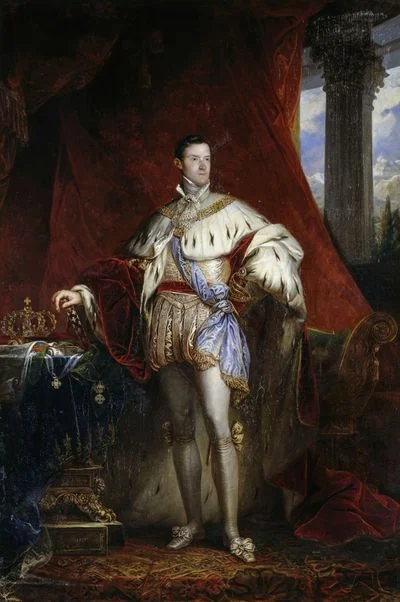
Following the abdication of King Carlo Felice, Carlo Alberto ascended to the throne as King of Sardinia, beginning his reign with a commitment to reform.
Carlo Alberto issued the Statuto Albertino, a constitution that established a parliament and limited the powers of the monarchy, marking a significant step towards liberal governance.
Carlo Alberto led Sardinia into the First Italian War of Independence against Austria, aiming to liberate Lombardy and Venetia.
Following military setbacks and political pressure, Carlo Alberto abdicated in favor of his son, Vittorio Emanuele II, and went into exile.
Carlo Alberto died in Porto, Portugal, where he had been living in exile, leaving behind a legacy of reform and contribution to Italian unification.