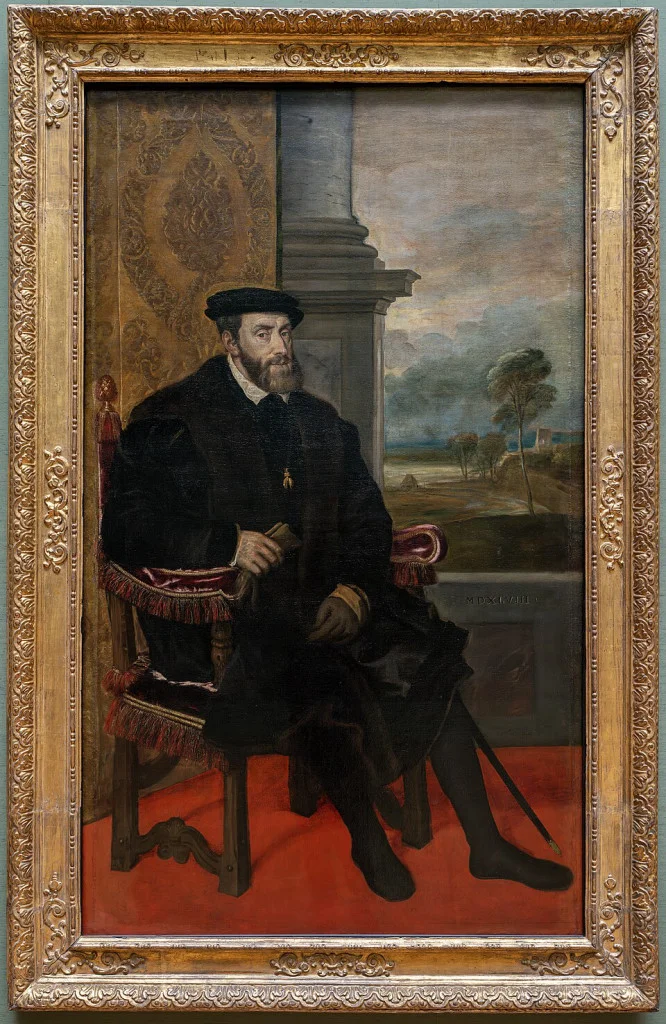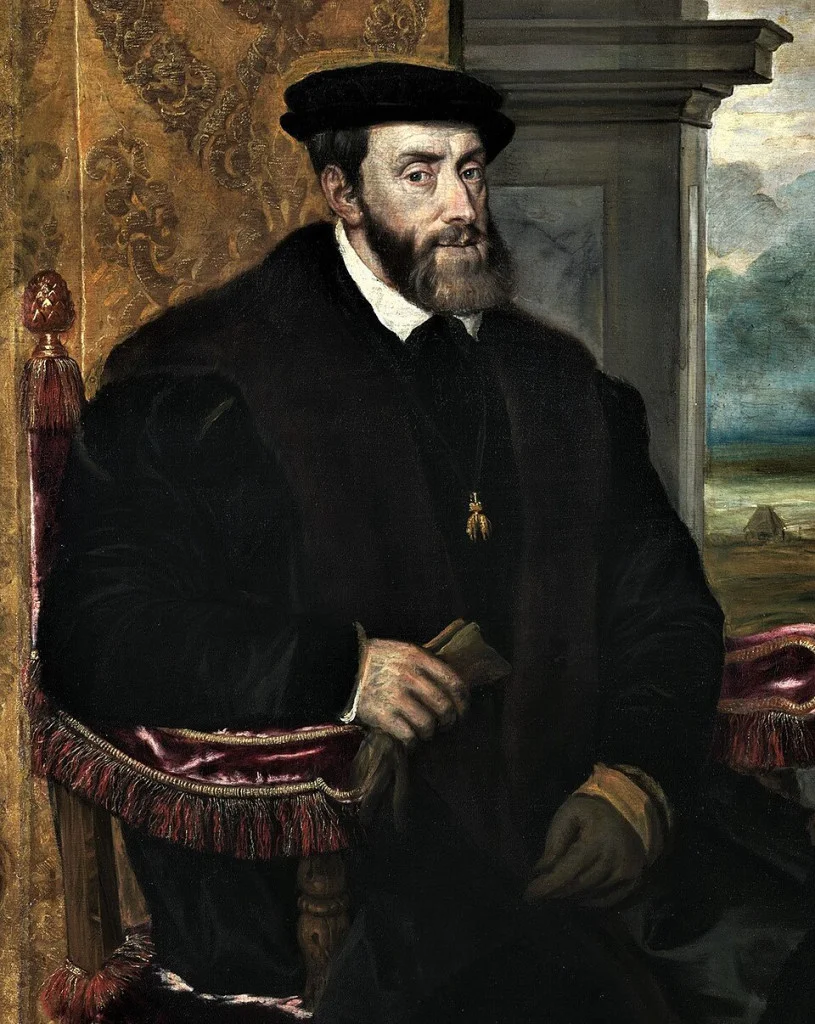
합스부르크 제국의 통치자. 영토를 분할하고, 기독교 세계를 수호하며, 종교개혁에 맞서 싸웠다.
대화 시작하기
인생 여정
미래의 신성로마제국 황제이자 스페인 왕인 카를로스 1세는 플랑드르 헨트에서 카스티야의 후아나와 카스티야의 펠리페 1세 사이에서 태어났다.
여섯 살에 카를로스 1세는 아버지 카스티야의 펠리페 1세의 사망 후 부르고뉴 공국을 상속받았다.
카를로스 1세는 할아버지 페르난도 2세의 사망 후 카스티야와 아라곤 왕국을 상속받아 스페인 왕위에 올랐다.
카를로스 1세는 신성로마제국 황제로 선출되어 스페인에서 네덜란드와 독일에 이르는 영토를 가진 유럽에서 가장 강력한 통치자가 되었다.
카를로스 1세는 마르틴 루터가 자신의 사상을 변호한 보름스 제국의회를 주재하여 개신교 종교개혁의 중요한 순간을 표시했다.
카를로스 1세는 파비아 전투에서 프랑스의 프랑수아 1세를 격파하고 프랑스 왕을 포로로 잡아 이탈리아에 대한 지배력을 강화했다.
카를 5세의 군대가 이끄는 제국군이 로마를 약탈하여 교황령과 교황 클레멘스 7세에게 큰 타격을 입혔다.
카를로스 1세는 프랑스의 프랑수아 1세와 캉브레 평화조약을 체결하여 이탈리아 전쟁을 종결하고 유럽에서의 지배권을 확보했다.
카를로스 1세는 볼로냐에서 교황 클레멘스 7세에 의해 신성로마제국 황제로 대관되어 기독교 세계에서 가장 강력한 통치자로서의 지위를 공고히 했다.
카를로스 1세는 오스만 제국으로부터 튀니스를 점령하는 성공적인 군사 원정을 이끌어 기독교 세력을 위해 지중해를 확보했다.
카를로스 1세는 포르투갈의 이사벨라와 결혼하여 전략적 동맹을 형성하고 포르투갈 왕실과 강력한 왕조적 유대를 확보했다.
카를로스 1세와 포르투갈의 이사벨라는 첫 아들 펠리페 2세를 낳았으며, 그는 카를로스 1세의 뒤를 이어 스페인과 네덜란드의 왕이 되었다.
카를로스 1세는 뮐베르크 전투에서 슈말칼덴 동맹의 개신교 세력을 격파하여 신성로마제국에서의 권위를 재확인했다.
카를로스 1세는 신성로마제국 내에서 루터교의 정당성을 인정하는 아우크스부르크 평화조약에 서명하여 종교개혁에서 중요한 타협을 표시했다.
카를로스 1세는 아들 펠리페 2세와 동생 페르디난트 1세에게 칭호를 양위하고 스페인 에스트레마두라의 유스테 수도원으로 은퇴했다.
카를로스 1세는 유스테 수도원에서 사망하여 유럽 역사상 가장 강력한 통치자 중 한 명으로서 방대하고 복잡한 유산을 남겼다.