Quick Facts
Last Bourbon king of France whose ultra-royalist policies and attempts to restore absolute monarchy led to the July Revolution of 1830 and final end of the senior Bourbon line.
Conversation Starters
Life Journey
Born Charles Philippe on October 9, 1757, as the youngest surviving son of the Dauphin Louis Ferdinand and Maria Josepha of Saxony. He was the grandson of Louis XV and brother to the future Louis XVI and Louis XVIII. Given the title Count of Artois, he grew up in the splendor of Versailles.
Charles married Princess Maria Theresa of Savoy. The marriage produced four children, including the Duke of Angoulême and the Duke of Berry. Unlike his arranged political match, Charles was known for his numerous romantic liaisons at court, contributing to his reputation for extravagance.
Upon the death of Louis XV, Charles's eldest brother became King Louis XVI. As Count of Artois, Charles became a leading figure at court, known for his charm, elegance, and lavish spending. He became the center of the court's pleasure-seeking faction.
Just two days after the storming of the Bastille on July 16, 1789, Charles became the first prince of the blood to emigrate. He fled to Turin with his family, beginning what would become 25 years of exile. His early flight would earn him leadership of the émigré cause.
Charles played a key role in securing the Declaration of Pillnitz, in which Austria and Prussia threatened intervention in France. Though largely a bluff, it hardened revolutionary opinion against the monarchy and contributed to the drift toward war and regicide.
Louis XVI was guillotined on January 21, 1793. Charles, in exile, grieved for his brother and became even more determined to restore the monarchy. He refused any compromise with revolutionary principles, a stance that would define his entire political career.
Charles supported the ill-fated Quiberon expedition, where émigré forces landed in Brittany to support a royalist uprising. The expedition ended in disaster, with hundreds of émigrés captured and executed. The failure demonstrated the difficulty of restoring the monarchy by force.
After years of wandering through various European courts, Charles settled in Britain, where he would remain until 1814. He lived at Holyrood Palace in Edinburgh and later in London, maintaining the émigré court and his ultra-royalist principles while Napoleon dominated Europe.
Following Napoleon's first abdication, Charles returned to France ahead of his brother Louis XVIII. He represented the ultra-royalist faction that sought to reverse the Revolution's changes. His prominence signaled the ongoing tension between moderate and extreme royalism.
Charles's younger son, the Duke of Berry, was assassinated by a Bonapartist fanatic on February 13, 1820. The tragedy devastated Charles and strengthened ultra-royalist influence. The subsequent birth of the 'miracle child' Henri preserved the direct line of succession.
Upon the death of Louis XVIII on September 16, 1824, Charles became King of France at age 66. Unlike his pragmatic brother, Charles was determined to restore royal authority and reduce the influence of liberals and the Charter. His reign would prove brief and disastrous.
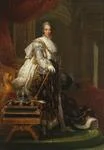
Charles X was crowned at Reims Cathedral on May 29, 1825, in the last traditional French coronation. The elaborate medieval ceremony, including the anointing with holy oil, emphasized divine right monarchy. Many saw it as dangerously out of touch with modern France.
Charles pushed through controversial legislation including the Law of Sacrilege (punishing church desecration with death) and compensation for émigrés who had lost property during the Revolution. These measures alienated moderates and revealed his reactionary agenda.
After the National Guard showed liberal sympathies during a royal review, Charles dissolved the force. This eliminated a potential check on royal power but also removed a buffer between the crown and the Parisian populace that would prove critical in 1830.
In August 1829, Charles appointed the ultra-royalist Prince de Polignac as chief minister, despite liberal majority in the Chamber. Polignac was widely hated for his reactionary views. The appointment signaled Charles's determination to rule without parliamentary support.
In June-July 1830, French forces conquered Algiers, beginning France's colonial presence in North Africa. Charles hoped the military victory would boost his popularity, but it came too late to save his throne and was overshadowed by domestic crisis.
On July 25, 1830, Charles issued the Four Ordinances dissolving the newly elected Chamber, restricting press freedom, reducing the electorate, and calling new elections. These measures, aimed at crushing liberal opposition, instead triggered revolution.
From July 27-29, 1830, Paris rose in revolt against the ordinances. Three days of street fighting ('Les Trois Glorieuses') brought down the Bourbon monarchy. Charles, at Saint-Cloud, fatally underestimated the uprising until it was too late to compromise or resist.
On August 2, 1830, Charles X abdicated in favor of his grandson Henri, but the Chamber instead offered the throne to Louis-Philippe of Orléans. Charles went into exile, first to Britain, then to Prague, and finally to Gorizia in the Austrian Empire.
Charles X died of cholera on November 6, 1836, in Gorizia (now in Italy). He had spent his final years in exile, never abandoning his belief in absolute monarchy. He was buried in the Franciscan monastery at Kostanjevica, where other exiled Bourbons would later join him.