Quick Facts
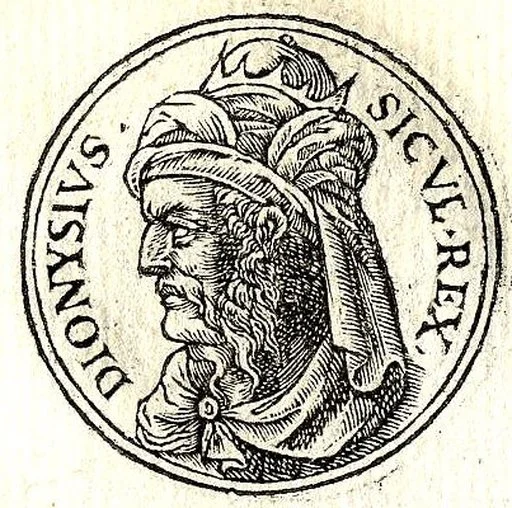
Tyrant of Syracuse who built a powerful empire through military cunning and transformed Sicily into a Greek superpower.
Conversation Starters
Life Journey
Dionysius was born into a family of modest means in Syracuse, the greatest Greek city in Sicily. His father was said to be a mule driver, though some sources suggest better origins. Nothing in his birth predicted the extraordinary power he would one day wield.
The young Dionysius witnessed Syracuse's dramatic victory over the Athenian expedition in 413 BC. The destruction of Athens' mighty armada demonstrated that a determined city could defeat the greatest military power in Greece, a lesson he never forgot.
During a crisis caused by Carthaginian invasion, Dionysius maneuvered to become sole strategos with absolute power. He eliminated rivals, survived assassination attempts, and established himself as tyrant. His rise combined military talent, political cunning, and ruthless elimination of opposition.
The citizens of Syracuse revolted against Dionysius's tyranny, besieging him in the citadel. When all seemed lost, Carthaginian threats rallied support back to him. He learned that external enemies could justify internal repression—a lesson he applied throughout his reign.
Dionysius gathered engineers and craftsmen to develop new weapons of war. His workshops produced the first true catapults—arrow-shooting machines that revolutionized siege warfare. This military innovation gave Syracuse decisive advantages against both Greek rivals and Carthage.
Dionysius constructed massive fortifications around Syracuse, including walls stretching 27 kilometers around the Epipolae plateau. These walls, built by 60,000 workers, made Syracuse the most heavily fortified city in the Greek world and virtually impregnable.
When a Carthaginian army besieged Syracuse, plague devastated the invaders. Dionysius launched a devastating counterattack, destroying the enemy fleet and army. Carthage sued for peace, cementing his position as defender of Greek Sicily against the barbarian threat.
Dionysius systematically conquered Greek cities throughout Sicily, destroying some and transplanting populations. He created a vast empire that included much of Sicily and southern Italy, making Syracuse the dominant power in the Western Mediterranean.
The philosopher Plato visited Syracuse, hoping to create a philosopher-king. Dionysius was initially intrigued but grew angry at Plato's frankness. According to legend, he sold Plato into slavery, though the philosopher was quickly ransomed by friends.
When the courtier Damocles praised Dionysius's happiness, the tyrant offered him a taste of royal life. Damocles feasted beneath a sword suspended by a single horsehair, learning that those in power live under constant threat. This story became an eternal symbol of tyranny's precariousness.
Dionysius extended his ambitions to southern Italy, attacking Greek cities and building a coalition against the Italian peoples. His campaigns brought vast wealth and expanded Syracusan influence but also created lasting enemies among the Greeks he claimed to protect.
Dionysius sent chariots and poets to the Olympic Games, seeking the cultural prestige that military power could not provide. His poems were mocked, his tents torn down by angry crowds. The rejection devastated him—he craved artistic recognition as much as political power.
Plato returned to Syracuse at the invitation of Dionysius's brother-in-law Dion, hoping to influence the aging tyrant. The visit ended badly, with Dionysius growing suspicious and Plato barely escaping with his life. Philosophy and tyranny proved incompatible.
At the Lenaea festival in Athens, Dionysius finally won a prize for his tragedy. The victory came too late to satisfy his desperate need for literary recognition. Some suspected the Athenians awarded the prize to curry favor with the powerful tyrant.
Dionysius died shortly after learning his tragedy had won first prize at the Dionysia in Athens. According to legend, the celebration feast killed him—either from excessive drinking or poison. He died having achieved the literary fame he craved, ruling Syracuse for 38 years.