Quick Facts
French novelist who created naturalism, documented France's working class with unflinching realism, and risked everything to defend Dreyfus with 'J'Accuse,' becoming a symbol of the engaged intellectual.
Conversation Starters
Life Journey
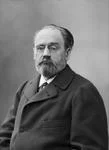
Born Émile Édouard Charles Antoine Zola on April 2, 1840, in Paris. His father was an Italian engineer; his mother was French. The family would move to Aix-en-Provence, where young Émile befriended Paul Cézanne.
His father died when Émile was seven, leaving the family in poverty. The experience of want would shape his lifelong compassion for the poor and his documentation of their struggles.
Returned to Paris to complete his education. Failed the baccalauréat twice. Lived in poverty in the Latin Quarter, experiencing the life he would later document in his early novels.
Joined the Hachette publishing house, first as a clerk, eventually as advertising director. The job introduced him to the literary world and gave him financial stability to write.
Published 'Thérèse Raquin,' his first major novel. Critics called it pornography and filth. Zola called it science - the beginning of naturalism.
Began the Rougon-Macquart cycle, his twenty-novel series documenting one family across the Second Empire. The project would consume the next twenty-two years of his life.
Published 'L'Assommoir,' his novel of working-class alcoholism. The book was a sensation - attacked as obscene but read by millions. Zola became famous and wealthy.
Published 'Nana,' his portrait of a Second Empire courtesan. Another scandal, another bestseller. Zola's documentation of desire and corruption shocked and fascinated France.
Published 'Germinal,' his masterpiece about coal miners. Zola had spent months in the mines, documenting conditions. The novel became a bible of the labor movement.
Completed the Rougon-Macquart cycle with 'Doctor Pascal.' Twenty novels, one family, one epoch. The project that defined naturalism and changed literature was finished.
Began investigating the Dreyfus case. Convinced of the captain's innocence, Zola prepared the most famous newspaper article in history.
On January 13, 1898, 'J'Accuse' appeared in L'Aurore. Zola accused the army and government of framing Dreyfus. France exploded. The article changed history.
Convicted of libel, Zola fled to England before sentencing. He spent eleven months in exile, watching the Dreyfus case unfold from afar.
Returned to France when his conviction was quashed on technicality. Dreyfus had been retried and, incredibly, convicted again - but then pardoned. The truth was emerging.
Émile Zola died on September 29, 1902, of carbon monoxide poisoning from a blocked chimney. Accident or murder by anti-Dreyfusards? The question haunts history. His last words allegedly were: 'I feel sick. My head is splitting.'