Chumi
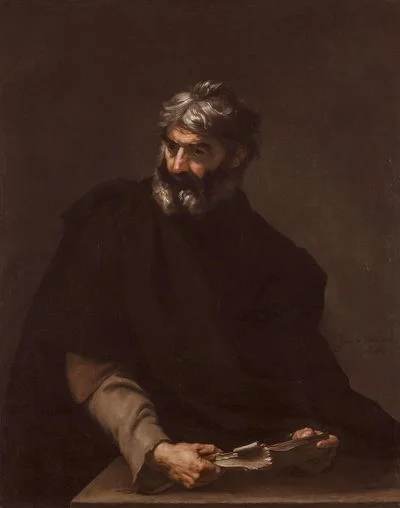
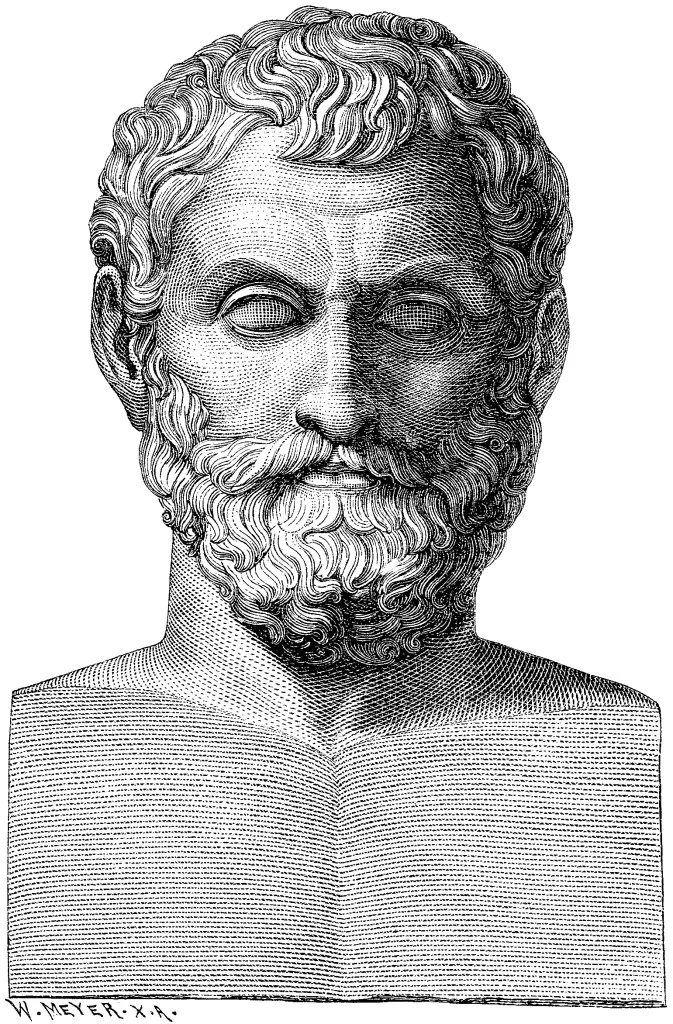
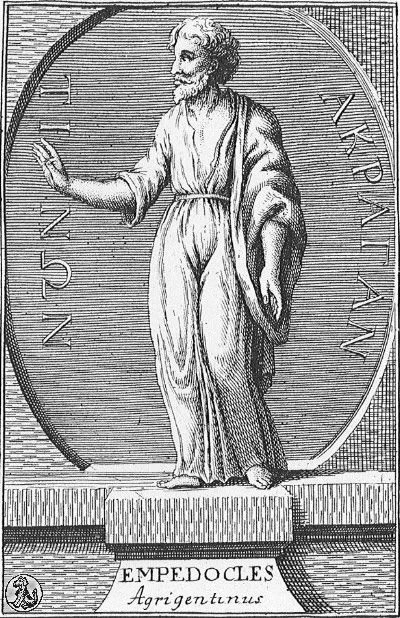
Empedocles

Empedocles

Philosopher

Start Chat

AI Personality

Quick Facts

Theory of the Four Elements
Pre-Socratic Philosophy

Life Journey

494 BCBorn in Acragas, Sicily

Empedocles was born into an aristocratic family in Acragas, one of the wealthiest Greek colonies in Sicily. His grandfather was said to have won an Olympic chariot race, and his family was prominent in local politics.

479 BCStudied Pythagorean Philosophy

Empedocles studied with Pythagorean teachers in southern Italy and Sicily. He was deeply influenced by their mystical beliefs about the soul, vegetarianism, and the mathematical nature of reality.

474 BCLearned from Parmenides

Empedocles studied the philosophy of Parmenides, learning his rigorous logical methods. He would later combine Parmenidean logic with his own theories about the nature of matter and change.

469 BCEstablished Philosophical School

Empedocles began teaching his own philosophical system, attracting students from across the Greek world. He dressed in purple robes and wore a golden crown, presenting himself as a semi-divine figure.

464 BCDeveloped Four Elements Theory

Empedocles formulated his theory that all matter consists of four eternal elements: earth, water, air, and fire. This became the dominant theory of matter in Western thought until the scientific revolution.

462 BCTheory of Love and Strife

Empedocles proposed that two cosmic forces, Love (Philia) and Strife (Neikos), govern all change in the universe. Love brings elements together while Strife separates them, creating endless cosmic cycles.

459 BCPolitical Leadership in Acragas

Empedocles played a prominent role in establishing democracy in Acragas after the fall of the tyranny. He reportedly refused the offer of kingship, preferring to remain a philosopher and physician.

456 BCWrote 'On Nature'

Empedocles composed his philosophical poem 'On Nature' (Peri Physeos), explaining his cosmology and physics in hexameter verse. About 450 fragments survive, preserving his teachings on matter and cosmic cycles.

454 BCWrote 'Purifications'

Empedocles wrote 'Purifications' (Katharmoi), a religious poem about the soul's journey through reincarnation and the path to divine status. It reflects Pythagorean and Orphic influences on his thought.

452 BCMedical Discoveries

Empedocles made important contributions to medicine, including early understanding of respiration and the blood system. He reportedly saved the city of Selinus from plague by draining nearby marshes.

449 BCTheory of Perception

Empedocles developed an influential theory of perception, proposing that emanations from objects enter pores in the sense organs. His theory that 'like perceives like' influenced later philosophers including Aristotle.

446 BCExiled from Acragas

Empedocles was exiled from Acragas, possibly due to political conflicts or accusations of impiety. He traveled to the Greek mainland and possibly visited Athens, spreading his teachings.

439 BCTraveled to Peloponnese

Empedocles traveled in the Peloponnese, visiting Olympia and other sacred sites. He continued teaching and was renowned as a healer, poet, and wonder-worker throughout the Greek world.

436 BCReturned to Sicily

Empedocles returned to Sicily in his final years. According to various accounts, he was barred from returning to Acragas and lived among his followers elsewhere on the island.

434 BCDied in Sicily

The circumstances of Empedocles' death are legendary. One tradition says he leaped into Mount Etna's crater to prove his divinity. Others say he died in the Peloponnese or simply passed away in old age. His bronze sandal supposedly was thrown up by the volcano.

Chat