Quick Facts
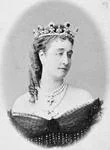
Spanish noblewoman who became Napoleon III's empress, fashion icon of the Second Empire, and staunch Catholic conservative who survived her husband and son to become Europe's grand old lady.
Conversation Starters
Life Journey
Born María Eugenia Ignacia Agustina de Palafox y Kirkpatrick on May 5, 1826, in Granada, Spain. Her father was a Spanish grandee, her mother of Scottish-Spanish descent. From birth, she was destined for a life of aristocratic privilege and beauty.
The family moved to Paris after her father's death. Young Eugénie received an education befitting a European noblewoman, learning French, literature, and the arts. Paris would become her true home.
The beautiful Spanish countess became a sensation in Parisian high society. Her red-gold hair, blue eyes, and perfect figure made her the toast of the salons. She caught the eye of Louis-Napoleon Bonaparte, soon to be emperor.
On January 30, 1853, Eugénie married Emperor Napoleon III at Notre-Dame Cathedral. European royalty sneered at the 'Spanish adventuress,' but she would prove herself more royal than most born to purple.
When Napoleon III traveled, Eugénie served as regent. She proved capable and decisive, attending Council meetings and influencing policy. Critics who expected a mere ornament were surprised by her political acumen.
On March 16, 1856, Eugénie gave birth to Napoleon Eugene Louis Jean Joseph, the Prince Imperial. The heir to the Empire was her greatest joy - and would become her greatest sorrow.
Eugénie's patronage of designer Charles Frederick Worth revolutionized fashion. Her crinolines, her colors, her styles were copied throughout Europe. She made Paris the undisputed fashion capital of the world.
Eugénie strongly supported Napoleon III's plan to establish Maximilian as Emperor of Mexico. Her Catholic conservatism and Spanish heritage drove her enthusiasm. The venture would end in disaster and execution.
Maximilian was executed by Mexican republicans. Eugénie, who had championed the intervention, bore part of the blame. The failure marked the beginning of the Empire's decline.
Eugénie reportedly encouraged war with Prussia, famously saying it was 'her war.' Whether true or not, she would bear the consequences. Within weeks, the Empire would collapse.
After Sedan, revolution erupted in Paris. On September 4, 1870, Eugénie fled the Tuileries through the Louvre, escaping to England with the help of her American dentist. The Second Empire was over.
Napoleon III died in exile on January 9, 1873. Eugénie, now a widow at forty-six, devoted herself to her son and to preserving her husband's memory. She would never remarry.
On June 1, 1879, her only son was killed fighting with British forces against the Zulus in South Africa. Eugénie's grief was total. She had lost everything - husband, son, empire.
Eugénie traveled to Africa to see where her son died. She erected a cross on the spot and collected stones from the site. Her pilgrimage was an act of maternal devotion that moved even her critics.
Eugénie maintained close friendship with Queen Victoria until the latter's death in 1901. Both women had known glory and loss. Eugénie attended Victoria's funeral as one of the last links to a vanished age.
The old Empress lived to see the Great War begin. France and England, now allies, fought Germany. Eugénie saw the destruction of the world she had known - and the vindication of her warnings about Prussian militarism.
Empress Eugénie died on July 11, 1920, at age ninety-four. She had outlived her husband by forty-seven years, her son by forty-one. The last Empress of the French was buried beside them at Farnborough Abbey.