Chat
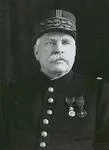
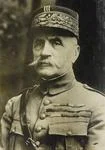
Marshal Ferdinand Foch, Supreme Allied Commander

Marshal Ferdinand Foch, Supreme Allied Commander

Marshal

Start Chat

AI Personality

Quick Facts

Supreme Allied Commander WWI
Victory in 1918
Military doctrine

French marshal who became Supreme Commander of Allied forces in WWI, architect of the final victory over Germany, whose aggressive doctrine of attack defined a generation of warfare.

Conversation Starters

Life Journey

1851Birth in Tarbes

Born Ferdinand Jean Marie Foch on October 2, 1851, in Tarbes in the Pyrenees. His family was devoutly Catholic; his brother became a Jesuit. Faith would shape his entire life and military philosophy.

1870Franco-Prussian War

Served as an infantry private in the Franco-Prussian War. The humiliating defeat by Prussia marked him forever. He vowed to dedicate his life to preparing France for revenge.

1871École Polytechnique

Entered the prestigious École Polytechnique after the war. His mathematical mind would later transform military theory. He graduated into the artillery, the scientific branch of the army.

1885École de Guerre

Attended the École Supérieure de Guerre (War College). Here he began developing his theories of warfare that would influence a generation of officers.

1895Professor at École de Guerre

Appointed professor at the War College. His lectures on the principles of war became legendary. He preached the doctrine of the offensive, the supremacy of morale over material.

1903Commandant of École de Guerre

Became commandant of the War College. His influence on French military doctrine was now immense. He trained the officers who would lead France in 1914.

1911Assigned to Field Command

Left the War College for field command. His career seemed to be winding down - but the Great War would call him back to the center of history.

1914First Battle of the Marne

Commanded the French Ninth Army at the First Battle of the Marne. His famous message: 'My center is giving way, my right is retreating, situation excellent, I am attacking.' The German advance was stopped.

1914Race to the Sea

Coordinated French, British, and Belgian forces during the 'Race to the Sea.' His ability to work with allies was noted. The front stabilized into four years of trench warfare.

1916Somme Offensive

Commanded the French forces at the Somme. The offensive failed to break through but showed Foch's growing skill in combined operations. The cost was horrific: millions of casualties.

1917Removed from Command

Removed from field command after the failures of 1916. It seemed his career was over. But the crisis of 1918 would bring him back to supreme command.

1918Supreme Allied Commander

In March 1918, as the German spring offensive threatened to split the Allied armies, Foch was appointed Supreme Commander of all Allied forces. Unity of command at last.

1918Second Battle of the Marne

In July 1918, Foch launched the counteroffensive at the Second Marne. It was the turning point. The Allies never stopped attacking until the Armistice.

1918The Hundred Days

Coordinated the final Allied offensives of 1918, the Hundred Days. German resistance crumbled. By November, they requested an armistice.

1918Armistice Signed

On November 11, 1918, the Armistice was signed in Foch's railway carriage at Compiègne. The war was over. Foch was made Marshal of France, Britain, and Poland.

1919Treaty of Versailles

Advised on the Treaty of Versailles. He argued for harsher terms against Germany, warning: 'This is not a peace. It is an armistice for twenty years.' He was almost exactly right.

1929Death in Paris

Marshal Ferdinand Foch died on March 20, 1929. He was buried at Les Invalides beside Napoleon. His prediction about the twenty-year armistice would prove prophetic.

Related Figures