Quick Facts
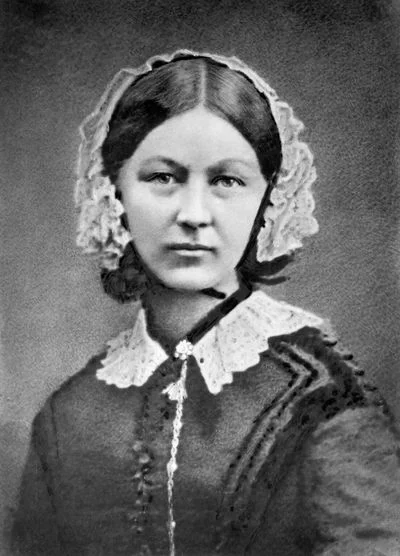
Lady with the Lamp. Transformed nursing from menial work into a noble profession.
Conversation Starters
Life Journey
Florence Nightingale was born to a wealthy British family in Florence, Italy, and named after her birthplace. Her parents expected her to marry well and lead a conventional life.
Florence experienced what she described as a call from God to dedicate her life to service, the first of four such experiences that shaped her destiny.
Florence decided to become a nurse despite fierce family opposition, as nursing was then considered unsuitable for educated women of her class.
Florence traveled through Europe and Egypt studying hospital systems and nursing practices, gathering knowledge that would transform healthcare.
Florence trained at the Kaiserswerth Institute in Germany, one of the few places offering formal nursing education, defying her family's wishes.
Florence became superintendent of the Institution for the Care of Sick Gentlewomen in London, gaining administrative experience that proved invaluable.
Florence led 38 volunteer nurses to Scutari to care for British soldiers in the Crimean War, entering hospitals filled with death and disease.
Florence reduced the death rate from 42% to 2% by implementing sanitary reforms, earning the nickname 'The Lady with the Lamp' for her night rounds.
Florence returned from Crimea as a national hero but suffered chronic illness that confined her to bed for much of her remaining life.
Florence became the first female member of the Royal Statistical Society, recognized for her pioneering use of statistical graphics in healthcare.
Florence published 'Notes on Nursing', which became the foundation text for nursing education and was translated into multiple languages.
Florence founded the Nightingale Training School at St Thomas' Hospital, establishing nursing as a respectable profession for women.
Florence began decades of work advising on sanitary reform in India, using statistical analysis to reduce mortality rates across the subcontinent.
Florence became the first woman to receive the Order of Merit from King Edward VII, recognizing her lifetime of service to humanity.
Florence Nightingale died peacefully in her London home at 90. She had declined a state funeral, requesting a simple burial. Her work transformed nursing worldwide.