Quick Facts
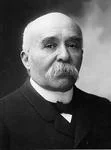
Fierce French statesman known as 'The Tiger' who led France to victory in World War I, destroyed ministries with his journalism, and shaped the Treaty of Versailles with uncompromising resolve.
Conversation Starters
Life Journey
Born Georges Benjamin Clemenceau on September 28, 1841, in the Vendée. His father was a rural doctor with fierce republican beliefs. The boy inherited both the medical calling and the political fire.
Began medical studies in Paris, but politics proved more compelling. Young Clemenceau joined radical republican circles opposing Napoleon III's empire. He was briefly imprisoned for political activities.
Traveled to America after completing his medical degree. Taught French and horseback riding, married an American woman, and observed democracy in action. Returned to France with broader horizons.
Became mayor of Montmartre during the Franco-Prussian War. Witnessed the Siege of Paris and the birth of the Commune. His attempts to mediate between Versailles and Paris failed tragically.
Began his parliamentary career as a Radical Republican deputy. His slashing attacks on ministers earned him the nickname 'The Tiger' and the reputation as the 'destroyer of ministries.'
His attacks brought down Jules Ferry's government over colonial policy in Indochina. Clemenceau opposed colonial adventures that weakened France against the real enemy: Germany.
Falsely implicated in the Panama Canal scandal, his political career seemed destroyed. For a decade he was in the wilderness, rebuilding his reputation through journalism.
Became the leading parliamentary champion of Captain Alfred Dreyfus. Published Émile Zola's 'J'Accuse' in his newspaper L'Aurore. The fight for justice consumed him for years.
Returned to parliament as a Senator from Var. His reputation restored, he was now an elder statesman of the Republic, but still a tiger ready to strike.
Became Prime Minister and Minister of the Interior. Broke strikes with force, pursued anti-clerical policies, and reformed the police. The Tiger showed he could govern as fiercely as he attacked.
His government fell after three years. Clemenceau returned to journalism and the Senate, watching as Europe drifted toward war and French governments proved unequal to the challenge.
The Great War began. Clemenceau, now in his seventies, used his newspaper to attack defeatism and incompetence. 'I wage war,' he wrote, demanding total commitment to victory.
In November 1917, with France's armies mutinous and morale collapsing, President Poincaré called the seventy-six-year-old Tiger to form a government. Clemenceau accepted with two words: 'I wage war.'
Crushed defeatism at home and coordinated Allied strategy at the front. When the German spring offensive nearly broke through, Clemenceau's iron will held France together.
On November 11, 1918, the guns fell silent. Clemenceau had led France to victory. 'The Tiger' wept in parliament as he announced the end of the war.
Dominated the Paris Peace Conference with Lloyd George and Wilson. Demanded harsh terms for Germany, though he later said the treaty was not harsh enough. 'This is not a peace, it is a twenty-year armistice.'
Lost the presidential election to the colorless Paul Deschanel. The Tiger, who had saved France, was discarded by a tired nation. He retired bitterly to write and garden.
Died on November 24, 1929, at age eighty-eight. His last words reportedly were: 'I wish to be buried standing, facing Germany.' The Tiger's vigilance never ended.