Quick Facts
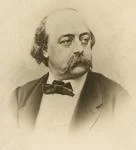
French novelist who perfected literary realism with Madame Bovary, tortured himself for le mot juste, despised bourgeois stupidity, and became the master whom all modern novelists acknowledge.
Conversation Starters
Life Journey
Born Gustave Flaubert on December 12, 1821, in Rouen. His father was the chief surgeon at the local hospital. Young Gustave grew up in the hospital apartments, surrounded by medicine and death.
Met Elisa Schlésinger on the beach at Trouville. The married older woman became his lifelong obsession, inspiring characters in 'Sentimental Education' and other works.
Suffered a severe nervous collapse, possibly epilepsy. Abandoned his law studies and retreated to Croisset, the family estate outside Rouen. He would spend most of his life there.
His father died in January, his beloved sister Caroline in March. Flaubert was left with his mother and his infant niece. The losses deepened his isolation.
Began his turbulent affair with the poet Louise Colet. Their correspondence, filled with his theories of art, became legendary. The relationship was more literary than romantic.
Traveled to Egypt and the Near East with Maxime Du Camp. The journey provided material for 'Salammbô' and 'The Temptation of Saint Anthony.' He also contracted syphilis.
Began writing 'Madame Bovary,' the story of a provincial doctor's wife destroyed by romantic illusions. The novel would take five years of agonizing work.
Published 'Madame Bovary' in serial form. The novel's frank depiction of adultery and provincial life caused a sensation. Flaubert was prosecuted for obscenity.
Tried for offending public morality with 'Madame Bovary.' Flaubert was acquitted. The trial made him famous and established the novel as a masterpiece.
Published 'Salammbô,' his epic novel of ancient Carthage. The exotic subject surprised readers expecting more provincial realism. Flaubert had spent years researching.
Published 'L'Éducation sentimentale,' his masterpiece about lost illusions and the Revolution of 1848. Critics were cool; later generations recognized its genius.
His dear friend George Sand died. Flaubert was devastated. Their correspondence had been one of his great consolations. He was increasingly alone.
Working on 'Bouvard et Pécuchet,' his final novel satirizing bourgeois stupidity. The book remained unfinished at his death - appropriately, perhaps, for a perfectionist.
Gustave Flaubert died of a cerebral hemorrhage on May 8, 1880, at Croisset. He was found on his divan, manuscript pages scattered around him. The search for le mot juste was finally over.