Quick Facts
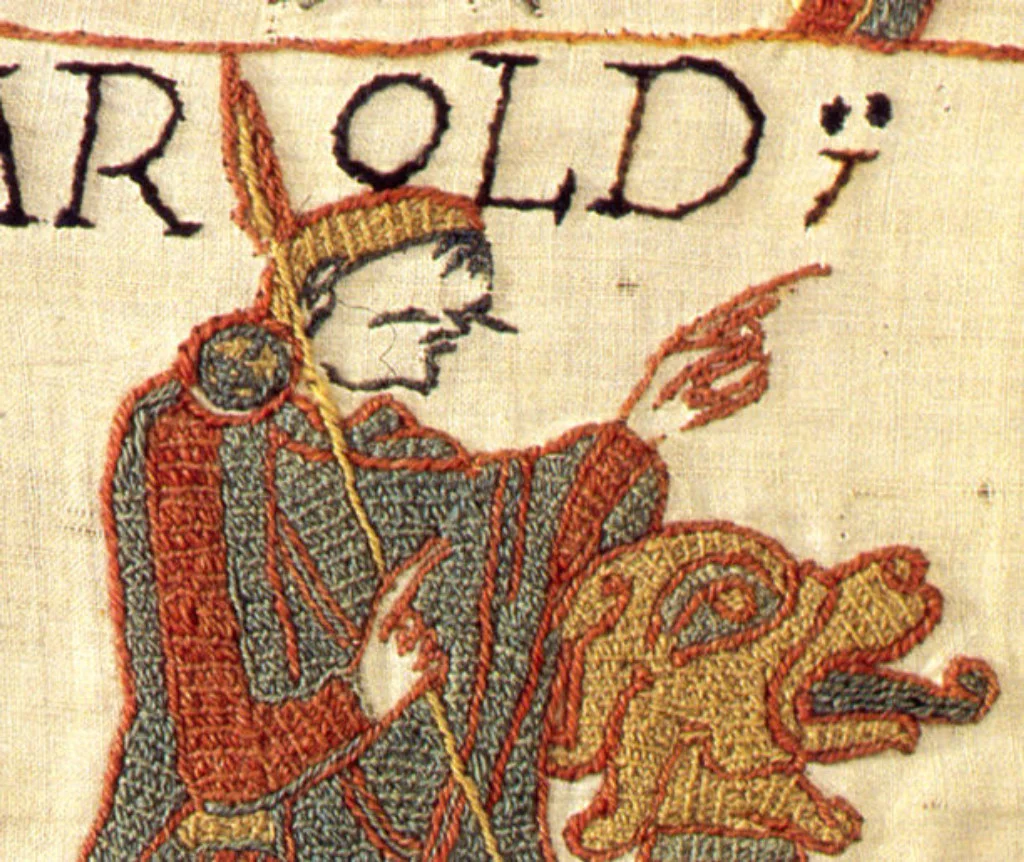
The last Anglo-Saxon king of England, who reigned from January to October 1066 and died at the Battle of Hastings.
Conversation Starters
Life Journey
Harold Godwinson was born to Godwin, Earl of Wessex, and Gytha Thorkelsdóttir, a powerful Anglo-Danish noblewoman. His birth marked the beginning of a life that would significantly impact English history.
Harold received his early education in the court of his father, Godwin, where he was taught the arts of leadership, military strategy, and governance. This foundation would later serve him well in his political and military roles.
Harold was appointed Earl of East Anglia by King Edward the Confessor, marking the beginning of his political career. This position gave him significant influence and responsibility in the region.
Harold married Edith Swanneck, a noblewoman and mother of his children. This marriage was significant for both personal and political reasons, strengthening his ties to the Anglo-Saxon nobility.
Harold succeeded his father as Earl of Wessex, becoming one of the most powerful men in England. His leadership and administrative skills were crucial in maintaining stability and loyalty in the region.
Harold led a successful military campaign to restore the Godwin family's lands and titles after they were exiled by King Edward the Confessor. This victory solidified his position as a leading noble in the kingdom.
Harold's first son, Godwin, was born. The birth of his heir was a significant personal event that also had political implications for the future of his lineage and power.
Harold led a military campaign against Welsh invaders, securing a decisive victory that enhanced his reputation as a skilled and effective military leader. This success further cemented his status as a key figure in the kingdom.
Harold traveled to Normandy to negotiate the release of his brother Wulfnoth and nephew Hakon, who were held hostage. During this visit, he reportedly swore an oath to support William of Normandy's claim to the English throne, though the exact nature of this oath is disputed.
Harold was appointed Earl of Hereford, expanding his territorial control and influence. This position required him to manage a diverse and sometimes volatile region, further showcasing his administrative and diplomatic skills.
Harold led a successful campaign to suppress a rebellion in Northumbria, led by Tostig Godwinson, his own brother. This victory demonstrated his ability to maintain order and loyalty within the kingdom, even in the face of internal conflict.
Harold and his brother Tostig led a joint campaign that defeated the Welsh ruler Gruffydd ap Llywelyn, bringing stability to the Welsh borders. This success further solidified Harold's reputation as a capable military leader.
Harold continued to consolidate his power and influence, becoming the de facto ruler of England. His leadership and strategic alliances with other nobles positioned him as the most likely successor to King Edward the Confessor.
Following the death of King Edward the Confessor, Harold was crowned King of England on January 6, 1066. This event marked the culmination of his political and military career and the beginning of his brief reign as the last Anglo-Saxon king.
Harold led the English army to a decisive victory over the invading forces of his brother Tostig and the Norwegian king Harald Hardrada at the Battle of Stamford Bridge. This victory was a testament to his military prowess and leadership.
Harold II was killed in the Battle of Hastings on October 14, 1066, while leading the English army against the invading forces of William of Normandy. His death marked the end of Anglo-Saxon rule in England and the beginning of the Norman Conquest.