Chumi
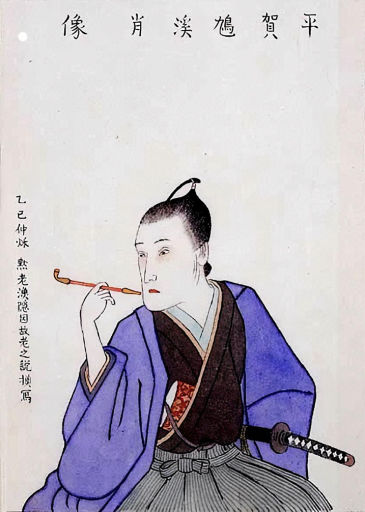
Hiraga Gennai

Hiraga Gennai

Inventor

Start Chat

AI Personality

Quick Facts

Edo-period rangaku (Dutch studies)
Experiments with electricity (Erekiteru)
Satirical fiction and social criticism

Life Journey

1728Born into the Hiraga family in Sanuki Province

Born in Sanuki Province on Shikoku, he grew up in a samurai household tied to the Takamatsu domain. Early exposure to domain administration and local industries shaped his later interest in practical knowledge and commerce.

1745Begins formal study of medicine and natural history

As a youth he pursued medicine, materia medica, and natural history, fields central to Edo intellectual life. He learned to classify plants and remedies while questioning inherited authority, favoring observation and experiment.

1752Travels to Osaka and Kyoto to broaden scholarly networks

He sought advanced teachers and books in the commercial and cultural hubs of Kansai. In Osaka and Kyoto he encountered merchants, physicians, and writers whose pragmatism encouraged his later blend of scholarship and enterprise.

1754Moves toward Edo’s world of rangaku and publishing

Drawn to Edo’s markets for ideas and curiosities, he positioned himself among scholars interested in Western learning. He began cultivating contacts who could access imported texts and instruments despite Tokugawa restrictions.

1757Studies and practices rangaku (Dutch studies)

He immersed himself in rangaku, using Dutch sources to learn about anatomy, physics, and new technologies. Working around language barriers, he compared foreign claims with Japanese practice and promoted empirical verification.

1761Publishes satirical and popular writings under multiple personas

He entered the lively world of Edo print culture, producing witty works that mocked fashionable pretensions and stale scholasticism. His humor targeted hypocrisy across classes, making him admired by readers and risky to patrons.

1763Promotes local products through “bussan” economic projects

He advised domains and merchants on developing specialty goods, an approach later associated with bussan and regional revitalization. Blending science and salesmanship, he encouraged better processing methods and stronger branding.

1765Experiments with Western-style electrical devices

Fascinated by reports of electricity, he investigated imported devices and descriptions circulating through Nagasaki trade. He aimed to reproduce the effects for both medical claims and public demonstrations that could fund his research.

1766Acquires or reconstructs an Erekiteru for demonstrations

He became associated with the Erekiteru, an electrostatic generator derived from European models. Demonstrations drew crowds and patrons, turning science into spectacle while also provoking skepticism from conservative scholars.

1767Engages physicians and patrons with medical-electric claims

He marketed electrical shocks as potentially therapeutic, reflecting global fascination with electrotherapy in the eighteenth century. Collaborating with interested physicians and curious elites, he tested effects while navigating Edo’s medical orthodoxies.

1769Shifts between domain service and independent entrepreneurship

His career oscillated between official ties and freelance ventures, a precarious path for a samurai-born intellectual. He leveraged introductions and gifts to secure projects, but unstable financing repeatedly forced new reinventions.

1771Publishes sharper social critique amid Edo urban culture

As urban consumer culture expanded, he wrote more pointed satire about money, status, and corrupt expertise. The works resonated with townspeople yet increased the chance of censorship and backlash from those lampooned.

1773Pursues mining and resource-development schemes

He proposed practical projects involving minerals and extraction, reflecting Edo interest in domestic resources and technology. Such ventures required capital and political backing, and setbacks deepened his financial and social pressures.

1775Navigates censorship risks and rivalries in the publishing world

His notoriety attracted both admirers and enemies among writers, booksellers, and officials regulating print. He adapted by using pseudonyms and shifting genres, but the constant scrutiny constrained his freedom to experiment publicly.

1777Faces increasing instability in patronage and personal life

Repeated project failures and debt strained his relationships with sponsors and collaborators. Edo’s competitive intellectual marketplace left little room for prolonged setbacks, and his behavior grew more volatile under mounting stress.

1779Arrested after a violent incident and imprisoned

He became embroiled in a deadly quarrel and was taken into custody by Edo authorities. Imprisonment cut him off from work and patrons, and the episode eclipsed his public image as an inventive entertainer-scholar.

1780Dies in custody, leaving a contested legacy

He died while imprisoned, ending a life defined by audacious curiosity and social provocation. Later historians remembered him as a rangaku-minded polymath whose inventions and satire anticipated Japan’s modernizing impulses.

Chat