Quick Facts
A Christian daimyo’s wife who chose faith and honor amid Japan’s brutal Sengoku power struggles and sieges.
Conversation Starters
Life Journey
Born as Tama (also known as Akechi Tama) into the powerful Akechi family, daughter of Akechi Mitsuhide, a senior retainer in Oda Nobunaga’s rising regime. Her childhood unfolded amid constant warfare and shifting alliances of the Sengoku era.
She married Hosokawa Tadaoki, heir of the Hosokawa house, in a political union that strengthened ties among Oda Nobunaga’s leading vassals. The marriage placed her in the disciplined world of a prominent samurai clan with strict expectations of loyalty and decorum.
When her father Akechi Mitsuhide attacked Oda Nobunaga at Honnō-ji, the Akechi name became synonymous with treason after Mitsuhide’s swift defeat. As Mitsuhide’s daughter, she faced deadly stigma, and the Hosokawa household had to navigate survival under the new order.
To avoid political backlash, she was separated from court society and effectively confined under Hosokawa supervision, with her movements tightly controlled. This seclusion reflected the era’s collective punishment politics, where a woman’s lineage could endanger an entire domain.
As Christianity spread through the Kansai region, she encountered Kirishitan teachings via networks linked to Jesuit missionaries and Christian samurai households. Quiet instruction introduced her to Catholic prayer, ethics, and the idea of salvation beyond clan and status.
Toyotomi Hideyoshi issued the 1587 expulsion edict against missionaries, creating a climate of surveillance and suspicion around converts. Her interest in the faith now carried greater danger, forcing believers to rely on discretion and trusted intermediaries.
She was baptized as a Catholic and took the name Gracia, commonly linked to the Latin idea of divine grace. The decision was deeply personal yet politically fraught, because a daimyo household’s religion could be read as allegiance to foreign influence.
Her conversion reportedly strained relations within the Hosokawa house, where pragmatic loyalty to the Toyotomi regime and samurai norms clashed with Christian practice. Nevertheless, she persisted in prayer and charity, building a reputation for steadfast devotion.
As Hideyoshi unified Japan, the Hosokawa gained new responsibilities and lands through military service and political realignment. Gracia lived within a high-stakes elite sphere where hostages, marriages, and relocations were routine tools of governance.
During Hideyoshi’s invasions of Korea, many samurai households faced prolonged absences and tightened Toyotomi control. In this unsettled period, she maintained discreet Christian observance and relied on trusted attendants to sustain her religious community.
The crucifixion of the Twenty-Six Martyrs at Nishizaka in Nagasaki signaled an escalation in persecution under Hideyoshi. News of the executions reverberated through Kirishitan networks, deepening the sense that faith now demanded readiness for death.
Hideyoshi’s death left the Toyotomi government divided among powerful regents and rival factions. The Hosokawa, like many daimyo, reassessed loyalties as Tokugawa Ieyasu and Ishida Mitsunari moved toward open confrontation.
As war loomed, Hosokawa Tadaoki aligned with Tokugawa Ieyasu, placing the family in direct opposition to Ishida Mitsunari’s coalition. Gracia remained near Osaka, a strategic hostage market where daimyo families were vulnerable to coercion.
Mitsunari’s forces sought to take prominent daimyo wives to pressure husbands into joining the anti-Tokugawa camp, and Gracia became a prime target. The standoff exposed how women’s bodies and reputations were weaponized in Sengoku diplomacy and war.
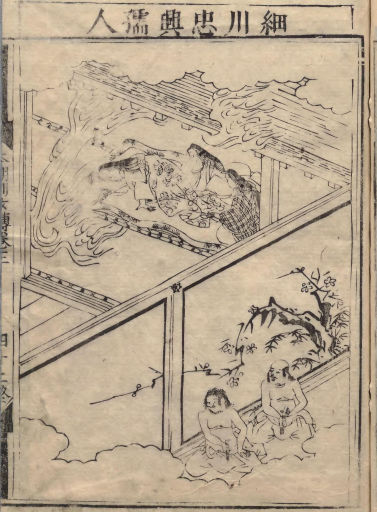
Rather than be captured, she died at the Hosokawa residence amid violence and fire, an outcome often associated with retainers acting to preserve her honor and prevent hostage-taking. Her death rapidly became emblematic, interpreted through both samurai ethics and Christian witness.
The failure to secure her as a hostage helped blunt Mitsunari’s broader plan to compel wavering lords, because other families saw the risks and resisted. In the lead-up to the Battle of Sekigahara, the incident hardened factional lines across central Japan.
After Tokugawa victory, her story circulated in Hosokawa records and Christian narratives, blending political tragedy with religious meaning. Writers and later dramatists portrayed her as a woman navigating coercion with uncommon agency in a violent age.