Chumi
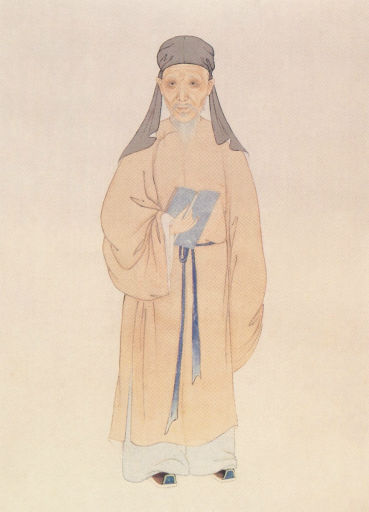
Huang Zongxi

Huang Zongxi

Political philosopher

Start Chat

AI Personality

Quick Facts

Waiting for the Dawn (Mingyi Daifanglu)
Critique of imperial autocracy
Foundational work in Ming-Qing intellectual history

Life Journey

1610Born into a politically engaged scholarly family

Born in Yuyao in Zhejiang, he grew up in a household shaped by late-Ming factional politics and academy learning. His father Huang Zunsu’s activism introduced him early to debates about moral governance and court corruption.

1625Formed by academy culture and Donglin moral politics

As a teenager, he absorbed the ethos of public-minded scholarship associated with the Donglin movement and local academies. Reading Neo-Confucian texts alongside current affairs, he learned to link ethics, institutions, and statecraft.

1626Father targeted during the Wei Zhongxian purges

The Tianqi court’s eunuch Wei Zhongxian intensified persecutions of moralist officials, ensnaring Huang Zunsu and his allies. The family’s ordeal convinced him that unchecked power and factional terror could destroy principled government.

1627Mourned his father and vowed political redress

After his father’s death following persecution, he entered a period of intense mourning and moral resolve. He pursued learning not as private cultivation alone, but as preparation to confront systemic abuses in the state.

1628Sought justice in the capital after the political reversal

With Wei Zhongxian disgraced and the Chongzhen Emperor promising reform, he traveled to press for rehabilitation of persecuted officials. The shifting court mood taught him how fragile justice was when it depended on imperial whim.

1630Began a lifelong program of historical and institutional study

Returning to Zhejiang, he undertook rigorous reading in history, classics, and administrative precedent, seeking practical lessons for governance. He cultivated networks of scholars who valued evidence, local knowledge, and moral accountability.

1637Entered the wider world of literati debate and teaching

He gained recognition among regional scholars for sharp critiques and disciplined historical reasoning, often framed through discussions of statecraft. Teaching and correspondence expanded his influence beyond Zhejiang into broader late-Ming intellectual circles.

1644Witnessed the fall of the Ming and the Manchu conquest

The collapse of the Ming in 1644 and the rise of the Qing shattered the political world he had prepared to serve. The catastrophe pushed him toward loyalist commitment and a deeper inquiry into why dynasties fail.

1645Joined Southern Ming loyalist resistance efforts

During the Southern Ming turmoil, he supported anti-Qing forces and associated with loyalist leaders and strategists. The brutal suppression of resistance convinced him that rebuilding political theory mattered as much as battlefield courage.

1646Went into hiding as Qing control tightened in the southeast

As Qing forces consolidated power in coastal Zhejiang and Fujian, he faced constant risk from informers and reprisals. He survived by moving discreetly and relying on friends, turning enforced seclusion into time for writing and reflection.

1650Shifted from activism to scholarship as loyalist hopes faded

With resistance largely crushed, he redirected his energies toward historical writing and political critique that could outlast the moment. He framed scholarship as a civic duty, preserving memories of Ming institutions and their failures.

1652Composed core arguments later known as 'Waiting for the Dawn'

He drafted the political treatise later titled 'Mingyi Daifanglu,' diagnosing autocracy as a structural disease rather than a personal failing. The work argued for constraints on rulers, empowered ministers, and institutions serving the public good.

1661Responded intellectually to the coastal crisis and Zheng regime

The Qing coastal evacuations and the maritime conflict with Zheng Chenggong (Koxinga) reshaped southeast China’s society and economy. He analyzed how state coercion harmed ordinary people and why policy required humane, informed administration.

1670Built the Eastern Zhejiang school’s historical method

He became a central figure in the Zhejiang learning tradition, stressing careful sources, local records, and institutional analysis. Students and peers treated his approach as a corrective to empty moralizing and careless historiography.

1679Refused Qing recruitment and protected loyalist integrity

When Qing authorities sought respected scholars for state projects and examinations, he maintained distance to avoid legitimizing the new regime. His refusals reinforced his reputation for principled loyalty and intellectual independence.

1683Reassessed China’s new order after the Qing unified the coast

With the fall of the Zheng regime in Taiwan and Qing consolidation, he confronted a lasting political reality. He emphasized long-term institutional reform and historical clarity over short-lived resistance fantasies.

1691Completed mature historical writings and mentored successors

In old age, he refined major historical studies of Ming learning and political life, shaping how later scholars understood the Ming-Qing transition. Through teaching and correspondence, he influenced a generation committed to evidence and statecraft.

1695Died as a revered scholar of principled political critique

He died in Zhejiang after decades of scholarship that blended moral purpose with institutional analysis. Later readers treated his writings as a landmark call for public-minded governance and limits on arbitrary imperial power.

Chat