Quick Facts
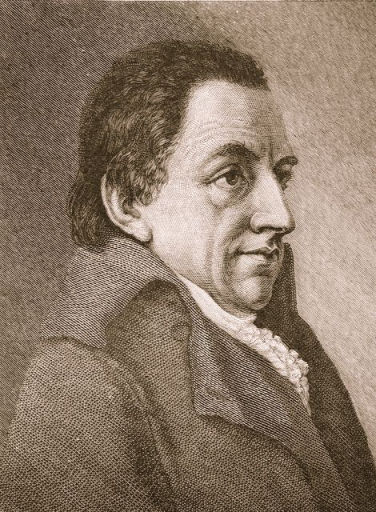
A fiery idealist who reshaped German philosophy, championing selfhood, moral autonomy, and national education amid revolution.
Conversation Starters
Life Journey
Johann Gottlieb Fichte was born into modest circumstances, the son of a ribbon weaver. Early poverty and village life in Saxony shaped his lifelong emphasis on duty, discipline, and moral self-formation.
A local noble patron took notice of his intellectual promise and helped secure educational opportunities beyond the village. The experience taught him how social structures could be remade through learning and character.
He entered the University of Jena intending a theological career, absorbing debates about reason, faith, and morality. Financial strain repeatedly interrupted his studies, sharpening his resolve to rely on intellectual work.
Fichte moved to the University of Leipzig to continue his education while struggling to fund basic living costs. The precariousness pushed him toward tutoring and practical work, keeping him close to everyday social realities.
He earned income as a private tutor, traveling and living in households where Enlightenment ideas circulated. These years honed his pedagogical instincts and deepened his conviction that education forms moral freedom.
While tutoring, he immersed himself in Immanuel Kant’s critical philosophy, especially the moral theory of autonomy. The encounter redirected his ambitions from theology to constructing a rigorous system grounded in freedom.
Fichte traveled to Königsberg to meet Kant, hoping to secure support in the competitive German intellectual world. The meeting strengthened his confidence that a new systematic philosophy could extend Kant’s project.
He published 'Attempt at a Critique of All Revelation,' initially mistaken by some readers as a new book by Kant. The sudden attention brought him into leading circles and gave him leverage to pursue an academic post.
In pamphlets on the French Revolution, he defended freedom and rational reform while confronting fears of chaos. These interventions tied his ethics to public life and made him a controversial figure in German states.
He accepted a professorship at Jena, then a center of German intellectual ferment. His lectures attracted large audiences and placed him among figures later associated with early German Idealism and Romanticism.
Fichte presented the 'Wissenschaftslehre,' arguing that the self-positing 'I' grounds knowledge and practical life. The system aimed to derive experience, obligation, and social relations from the activity of freedom.
He developed an ethics centered on self-determination, insisting that moral law is realized through concrete action. In Jena’s charged atmosphere, his uncompromising tone inspired students and antagonized critics alike.
Accusations of atheism flared after essays associated with his circle questioned traditional conceptions of God. The dispute became a test of academic freedom in German universities and drew intense political pressure.
Facing official censure and escalating hostility, Fichte left his post at Jena rather than submit to restrictions. The episode hardened his views on the state, public morality, and the vulnerability of intellectual life.
In 'The Vocation of Man,' he framed philosophy as an existential struggle toward moral certainty and freedom. Written for non-specialists, it helped cement his reputation as a passionate public thinker in Berlin.
He accepted a university chair at Erlangen, seeking stability after years of controversy. There he continued refining his system, emphasizing ethical community and the practical tasks of reason in history.
After Prussia’s defeat, Berlin fell under Napoleonic dominance, intensifying debates about culture and national renewal. Fichte responded by linking philosophical freedom to collective education and civic regeneration.
He lectured publicly at the Prussian Academy setting, urging educational reform as the path to moral and national renewal. Against the backdrop of French power, he called for disciplined schooling and civic virtue.
Fichte joined the new University of Berlin, built on reform ideals associated with Wilhelm von Humboldt. As its first elected rector, he promoted research and moral education as a unified mission for modern society.
During the upheavals following the Wars of Liberation, his wife Johanna cared for sick soldiers and brought illness home. Fichte contracted typhus and died, leaving influential students and a fiercely contested legacy.