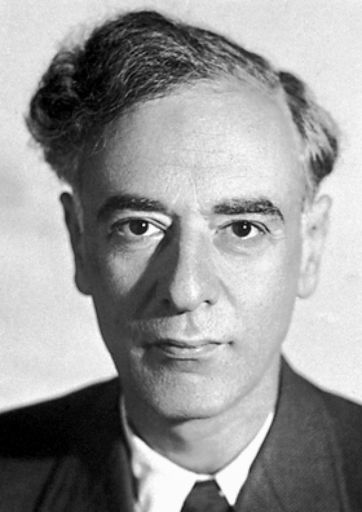
En bref
Théoricien soviétique brillant qui a remodelé la physique moderne grâce à des intuitions quantiques, des exigences rigoureuses et une indépendance intellectuelle sans peur.
Sujets de conversation
Parcours de vie
Né dans une famille juive à Bakou, alors partie de l’Empire russe, où la richesse pétrolière alimentait une modernisation rapide. Ses parents accordaient une grande valeur à l’éducation, et la culture cosmopolite de la ville l’exposa très tôt aux sciences et aux langues.
Il s’inscrivit à l’Université d’État de Bakou à un âge exceptionnellement jeune, étudiant la physique et les mathématiques avec une concentration intense. Le système académique de l’après-révolution ouvrait des voies aux étudiants talentueux, et sa rapidité intellectuelle hors norme se distingua immédiatement.
Il s’installa à Leningrad pour rejoindre un environnement scientifique plus solide et collaborer avec les principaux physiciens soviétiques. Les instituts de la ville, façonnés par le nouvel État soviétique, offraient l’accès à des séminaires et à une théorie de pointe.
Il termina ses études à l’Université de Leningrad et s’enfonça davantage dans le travail théorique au sein de grands centres de recherche. Mentors et pairs le poussèrent vers la nouvelle mécanique quantique, qui transformait alors rapidement la physique dans le monde entier.
Avec l’appui soviétique, il parcourut des centres européens, rencontrant des physiciens au cœur de la révolution quantique. Ces visites l’immergèrent dans une culture de séminaires rigoureux et aiguisèrent ses exigences intransigeantes de clarté intellectuelle.
Il passa une période formatrice à l’Institut de Niels Bohr, où la discussion et la critique étaient des outils centraux. L’accent mis par Bohr sur l’intuition physique influença le style de Landau, même s’il conserva une démarche farouchement indépendante.
Il obtint des résultats clés sur le mouvement quantifié des électrons dans les champs magnétiques, liés plus tard aux « niveaux de Landau » et à des phénomènes magnétiques dans les solides. Ce travail reliait la mécanique quantique abstraite à des propriétés mesurables des matériaux.
À l’Institut physico-technique d’Ukraine, il façonna les séminaires et la culture de recherche par une critique implacable et des attentes très élevées. Kharkiv devint un pôle soviétique majeur pour la théorie, attirant de jeunes talents avides de sa formation.
Il introduisit une approche phénoménologique puissante des transitions de phase fondée sur un paramètre d’ordre et des arguments de symétrie. Ce cadre, désormais appelé théorie de Landau, devint un outil standard en matière condensée et au-delà.
Il passa à Moscou tandis que la science soviétique se réorganisait sous pression politique et au gré des transformations institutionnelles. En naviguant les dangers de l’époque, il poursuivit ses travaux théoriques tout en développant des réseaux au sein des principales organisations de recherche.
Il fut arrêté pendant la Grande Terreur et détenu à la prison de la Loubianka, où de nombreux intellectuels faisaient face à des accusations fabriquées. Des collègues, dont Piotr Kapitsa, intervinrent pour faire valoir sa valeur scientifique pour l’État.
Après une pression soutenue de Piotr Kapitsa, il fut libéré et reprit le travail sous étroite surveillance. L’épisode renforça sa détermination à se consacrer à la physique, tandis que le système soviétique exigeait loyauté et prudence.
Il expliqua la superfluidité de l’hélium-4 à l’aide d’idées quantiques sur les excitations et l’écoulement sans viscosité. Son modèle relia des expériences à basse température à un nouveau langage théorique, influençant des générations de travaux en matière condensée.
Avec Evgueni Lifchitz, il construisit un cours en plusieurs volumes qui imposa une norme mondiale exigeante. Les textes distillaient des domaines complexes en arguments rigoureux, reflétant sa culture de séminaire et son souci de précision.
Il développa la théorie du liquide de Fermi pour décrire des fermions fortement en interaction dans les métaux et l’hélium-3, redéfinissant les quasi-particules et les comportements collectifs. Ce travail fournit un cadre unificateur pour une grande partie de la physique moderne de la matière condensée.
Un accident de voiture sévère lui causa des blessures aux conséquences durables, imposant une longue hospitalisation et une récupération limitée. Malgré le soutien de collègues et de la communauté scientifique soviétique, sa capacité à travailler avec la même intensité ne revint jamais.
Il reçut le prix Nobel de physique pour avoir été un pionnier de la théorie de la superfluidité de l’hélium. En raison de son état, d’autres le représentèrent, soulignant à la fois sa renommée et la tragédie de sa santé altérée.
Il mourut à Moscou après de longues complications consécutives à son accident, laissant à ses étudiants et collègues le soin de prolonger son héritage intellectuel exigeant. Ses idées restèrent ancrées dans la physique à travers des concepts portant son nom et des manuels.