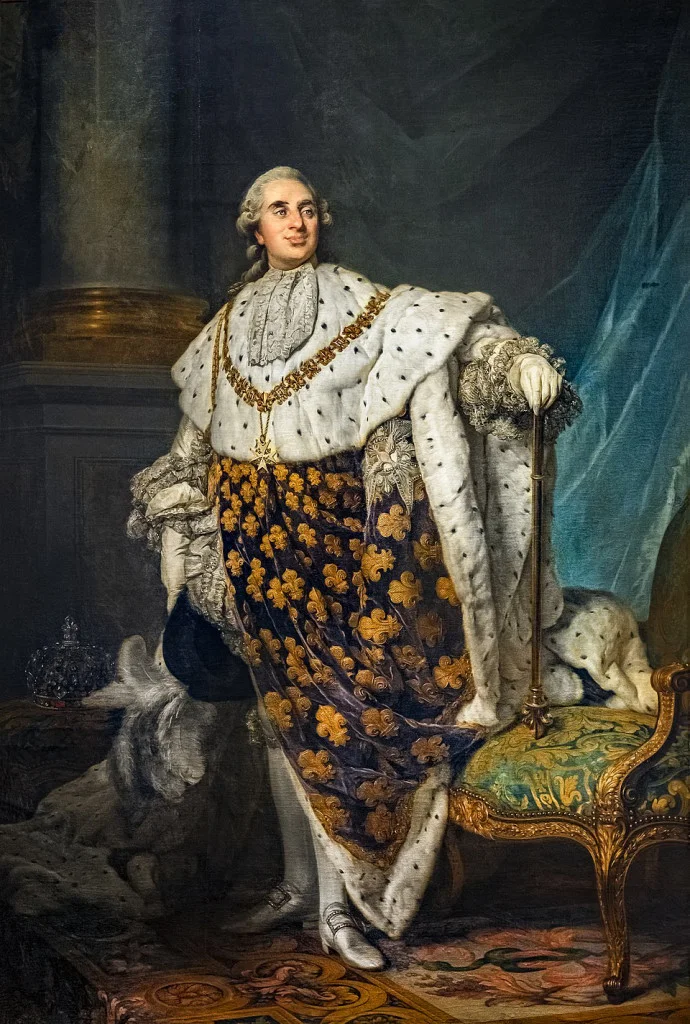
Quick Facts
Revolution ate its king": Louis XVI, beheaded monarch of France.
Conversation Starters
Life Journey
Louis Auguste was born at the Palace of Versailles as the third son of the Dauphin Louis and Maria Josepha of Saxony. His early birth position meant he was not expected to rule, but fate would place him on the throne.
The death of his father from tuberculosis moved Louis closer to the succession. His grandfather Louis XV still reigned, but Louis became the new Dauphin after his father's death.
Following his elder brother's death, Louis Auguste became heir to the French throne. As Dauphin, he received education to prepare for kingship, though he remained shy and awkward at court.
Louis developed passionate interests in geography, locksmithing, and mechanics rather than statecraft. He became an accomplished locksmith and enjoyed manual crafts, unusual hobbies for a future king.
Louis married the Austrian Archduchess Marie Antoinette in a magnificent ceremony at Versailles. The marriage alliance with Austria was politically important but the couple initially struggled with their relationship.
Upon Louis XV's death from smallpox, Louis XVI ascended the throne at age twenty. He reportedly exclaimed 'God help us, we are too young to reign,' sensing the troubles ahead.
Louis initially supported Enlightenment reforms, appointing Anne-Robert-Jacques Turgot to reform French finances and economy. However, court opposition led to Turgot's dismissal within two years.
Louis XVI allied France with American revolutionaries against Britain, hoping to weaken France's traditional enemy. The war would prove costly and ironically spread revolutionary ideas.
After eight years of marriage, Marie Antoinette finally gave birth to their first child, Princess Marie Therese. The birth relieved pressure on the royal couple and strengthened their bond.
Though innocent, the royal family's reputation was tarnished by the Diamond Necklace scandal involving Marie Antoinette. Public opinion turned increasingly hostile toward the queen.
Facing financial crisis, Louis summoned the Estates-General for the first time since 1614. This attempt to solve France's fiscal problems unleashed forces that would destroy the monarchy.
The storming of the Bastille on July 14 marked the start of the French Revolution. Louis's indecision and conflicting advice left him unable to effectively respond to the crisis.
A mob of women marched to Versailles and forced the royal family to relocate to the Tuileries Palace in Paris. Louis became effectively a prisoner in his own capital.
Louis and his family attempted to flee France but were recognized at Varennes and forced to return to Paris. This failed escape destroyed remaining trust between the king and revolutionaries.
Louis accepted the new constitutional monarchy, becoming a constitutional monarch with limited powers. However, he secretly hoped foreign intervention would restore his authority.
France declared war on Austria, beginning the Revolutionary Wars. Louis hoped for French defeat, which would be exposed through secret correspondence with foreign powers.
Following the storming of the Tuileries Palace, the monarchy was abolished and Louis was imprisoned with his family. He was now simply Citizen Louis Capet, awaiting trial.
Louis XVI was guillotined at the Place de la Revolution on January 21, 1793, convicted of conspiracy and treason. His final words reportedly affirmed his innocence. His execution shocked Europe and led to wider wars against revolutionary France.