Quick Facts
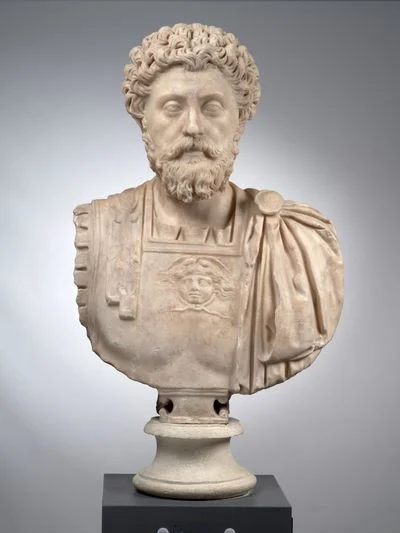
Meditations" emperor: Antoninus, philosopher-king, guided Rome with wisdom and virtue.
Conversation Starters
Life Journey
Marcus Annius Verus was born into a wealthy and politically connected family of Spanish origin. His father died when he was three, and he was raised by his grandfather who had served as consul three times.
Marcus received an excellent education from the finest tutors in Rome. He showed early aptitude for philosophy and was known for his serious demeanor, earning Emperor Hadrian's attention and favor.
Hadrian took personal interest in young Marcus, nicknaming him Verissimus meaning 'most true'. This imperial attention would shape his destiny as Hadrian began considering succession plans.
Marcus devoted himself to Stoic philosophy under teachers like Apollonius of Chalcedon and Junius Rusticus. He embraced a simple lifestyle, sleeping on the ground and wearing rough clothing.
When Hadrian adopted Antoninus Pius as successor, he required Antoninus to adopt Marcus and Lucius Verus in turn. This double adoption ensured Marcus would eventually inherit the throne.
Marcus held his first consulship, beginning his formal political career. He would serve as consul three times, gaining administrative experience while continuing his philosophical studies.
Marcus married Faustina, daughter of Antoninus Pius, strengthening his position as heir. They would have at least thirteen children together, though many died young. Their marriage lasted thirty years.
Antoninus Pius granted Marcus tribunician power, the legal basis of imperial authority. This effectively made him co-ruler and designated successor, preparing him for eventual sole rule.
Upon Antoninus Pius's death, Marcus became emperor and immediately elevated Lucius Verus as co-emperor. This was the first time Rome had two emperors with equal authority, showing Marcus's commitment to duty over power.
When Parthia invaded Roman territory, Marcus sent Lucius Verus to command the eastern armies. The resulting campaign was highly successful, capturing the Parthian capital and extending Roman influence.
Returning soldiers brought a devastating plague from the east that killed millions. Marcus personally helped organize relief efforts and sold imperial possessions to fund plague response.
Lucius Verus died suddenly, leaving Marcus as sole emperor. Despite their different temperaments, Marcus had worked harmoniously with his adoptive brother for eight years.
Germanic tribes invaded across the Danube, reaching northern Italy. Marcus personally commanded the armies for most of the remaining decade, pushing back the invaders through determined campaigning.
General Avidius Cassius declared himself emperor after false reports of Marcus's death. The rebellion collapsed when Marcus's survival became known, and Cassius was killed by his own soldiers.
Faustina died while accompanying Marcus on campaign. Despite later rumors about her conduct, Marcus honored her memory, establishing charitable foundations in her name.
Marcus made his son Commodus co-emperor, breaking the adoptive succession tradition. Despite concerns about Commodus's character, Marcus believed in dynastic succession to prevent civil war.
While campaigning on the frontier, Marcus wrote his philosophical journal known as Meditations. These personal reflections on Stoic philosophy became one of the most influential works of ancient philosophy.
Marcus died after a brief illness while on campaign. His reign marked the end of the era of the Five Good Emperors. His philosophical legacy endured, with Meditations inspiring readers for nearly two millennia.