Quick Facts
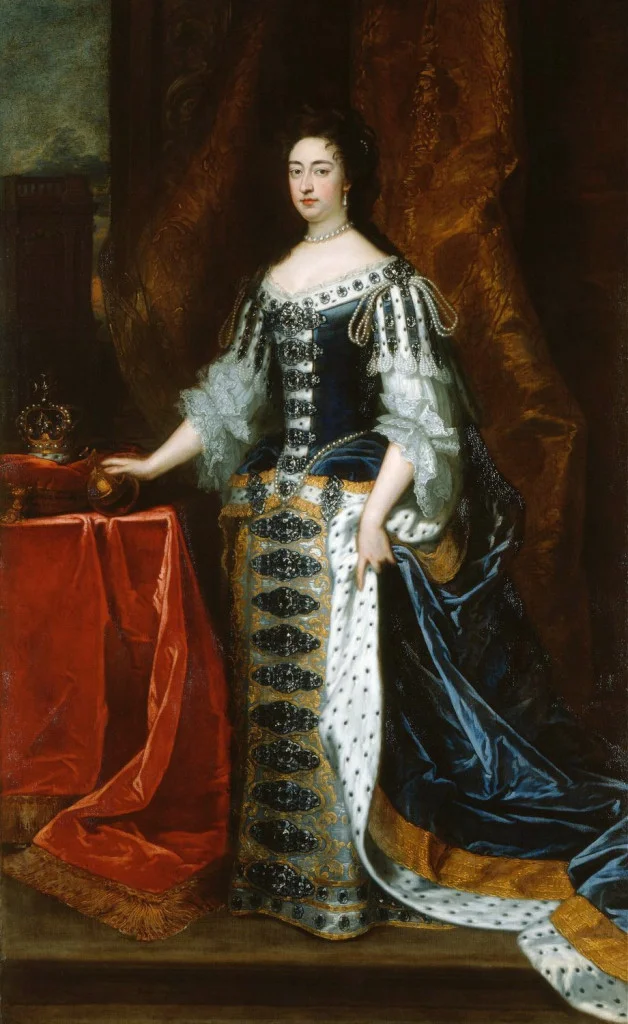
Glorious Revolution queen. Ruled with William III and secured Protestant succession.
Conversation Starters
Life Journey
Mary II, future Queen of England, Scotland, and Ireland, was born to James, Duke of York, and Anne Hyde.
Mary, at a young age, is appointed a Lady of the Bedchamber to her aunt, the Duchess of York, marking her early involvement in court life.
Mary begins her formal education, receiving instruction in religion, music, and languages, under the guidance of various tutors and governesses.
Mary marries William of Orange, a Dutch nobleman and future King of England, in a politically significant union aimed at strengthening ties between England and the Dutch Republic.
Mary leaves England to live in the Dutch Republic with her husband, where she adapts to her new role and gains experience in state affairs.
Mary becomes a patron of the arts and architecture, commissioning works and supporting artists, reflecting her refined tastes and cultural interests.
Mary's father, James II, ascends to the throne after the death of her uncle, Charles II, increasing her political significance as a potential heir.
Mary and William return to England to lead the Glorious Revolution, overthrowing her father James II and securing the Protestant succession.
Mary and William are crowned as co-monarchs, marking the beginning of their joint rule and the establishment of a constitutional monarchy.
Mary and William pass the Act of Toleration and the Bill of Rights, significantly limiting the powers of the monarchy and establishing parliamentary supremacy.
William leaves for Ireland to fight against the forces of James II, leaving Mary to rule as regent in his absence, demonstrating her political acumen.
Mary actively supports the Protestant succession by promoting the rights of her sister Anne and ensuring the exclusion of her father's Catholic heirs from the throne.
Mary establishes the Queen's College at Oxford University, reflecting her commitment to education and the advancement of learning.
Mary contracts smallpox, a serious illness that weakens her health and leads to her premature death, despite the best medical care available.
Mary II dies of smallpox at Kensington Palace, mourned by her subjects and remembered for her role in the Glorious Revolution and her joint rule with William III.