Quick Facts
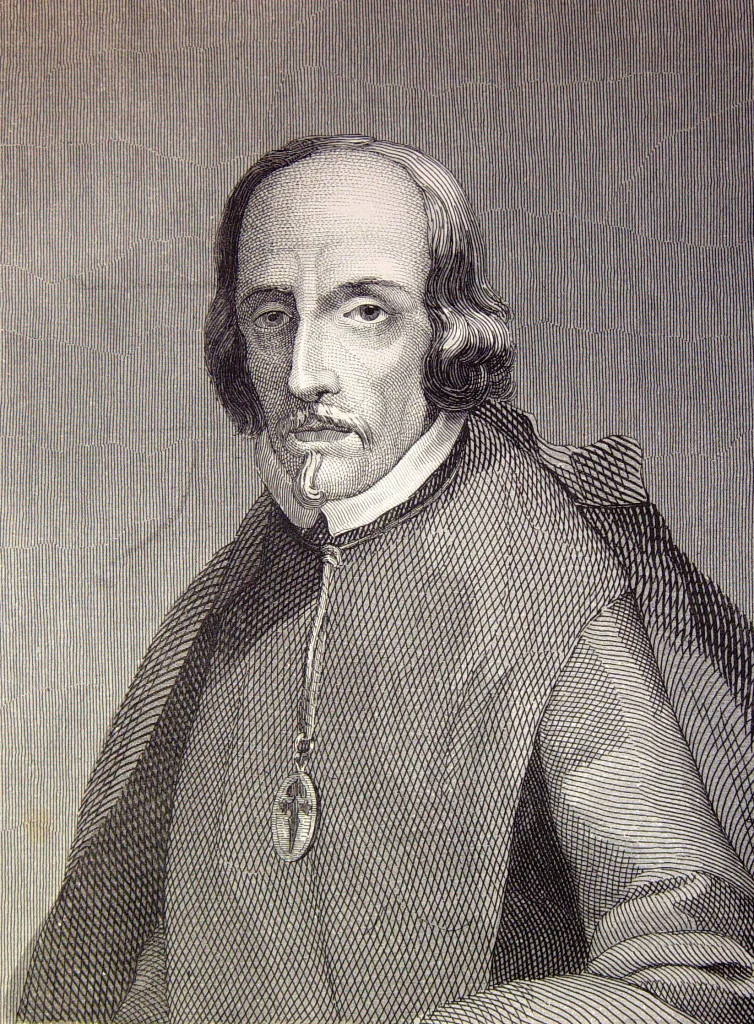
Life is a Dream": Calderón de la Barca, Spain's Golden Age playwright.
Conversation Starters
Life Journey
Pedro Calderón de la Barca was born to Pedro Calderón and Leonor de Barca in Madrid, Spain.
Calderón enrolls in the Jesuit College of San Andrés in Madrid, where he receives a rigorous education in the humanities and classical literature.
Calderón moves to Salamanca to study law at the prestigious University of Salamanca, one of the oldest universities in Spain.
After completing his studies, Calderón returns to Madrid and begins to engage in literary and theatrical circles, honing his skills as a playwright and poet.
Calderón's first play, 'Amor, honor y poder,' is performed at the royal court, marking the beginning of his successful theatrical career.
Calderón is appointed the official court dramatist to King Philip IV, a position that secures his reputation as one of Spain's leading playwrights.
Calderón publishes his masterpiece, 'La vida es sueño' (Life Is a Dream), which explores themes of free will and destiny, becoming one of his most celebrated works.
Calderón serves in the military during the Catalan Revolt, a period of political unrest in Spain, demonstrating his loyalty and versatility.
After a period of reflection, Calderón decides to enter the priesthood, taking his vows and dedicating himself to religious life and service.
Calderón is appointed as the royal chaplain to King Philip IV, further solidifying his status and influence within the Spanish court.
Calderón publishes 'El gran teatro del mundo' (The Great Theatre of the World), a philosophical play that explores the human condition and the nature of reality.
Despite his religious duties, Calderón continues to write and produce plays, maintaining his influence in the Spanish Golden Age of theater.
Calderón is honored by the royal court for his lifelong contributions to Spanish literature and theater, receiving numerous accolades and awards.
Calderón, now in his mid-seventies, gradually retires from active writing, focusing more on his religious duties and personal reflections.
Pedro Calderón de la Barca dies in Madrid, leaving behind a legacy as one of the most influential playwrights of the Spanish Golden Age.