Quick Facts
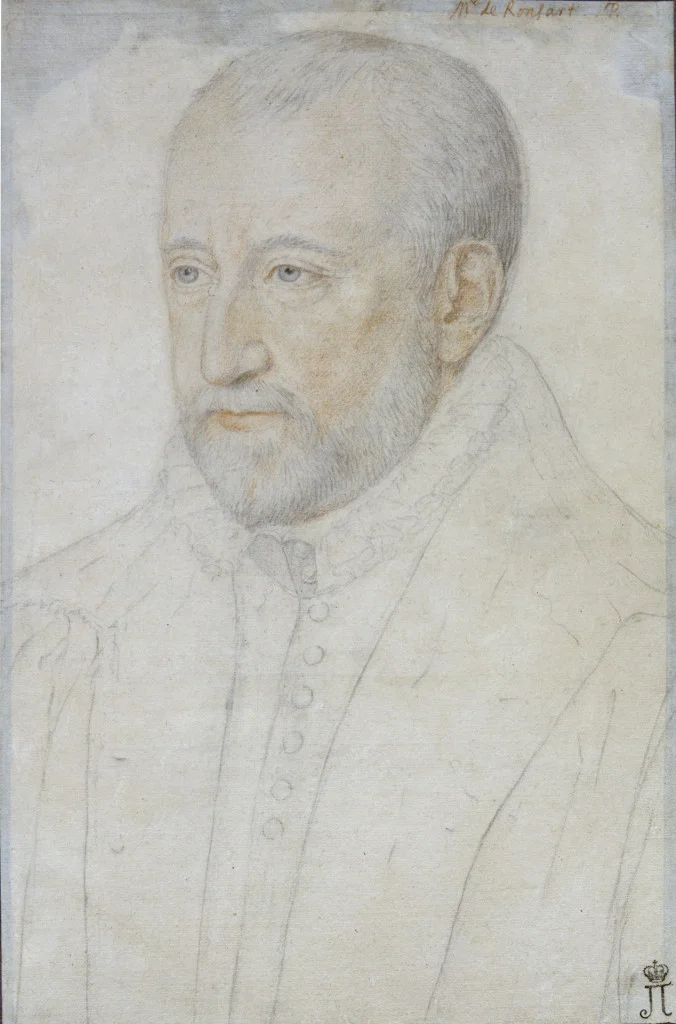
Prince of Poets. Led the Pléiade and made French lyric verse sing.
Conversation Starters
Life Journey
Pierre de Ronsard was born to a noble family in the village of La Possonnière, near the Château de Couture-sur-Loir.
Ronsard begins his formal education at the prestigious Collège de Navarre in Paris, where he studies Latin, Greek, and rhetoric.
Ronsard becomes a page to the Duke of Angoulême, which provides him with a valuable opportunity to observe court life and refine his social skills.
Ronsard enrolls at the University of Paris to further his education, focusing on classical literature and languages.
Ronsard is appointed as a Clerk of the King's Chamber, a position that brings him closer to the royal court and influences his future literary career.
Ronsard, along with Joachim du Bellay and others, forms La Pléiade, a group of seven poets dedicated to reviving classical forms of poetry in French literature.
Ronsard publishes his first major work, 'Les Odes,' which showcases his mastery of the ode form and establishes him as a leading poet of the French Renaissance.
Ronsard starts writing 'Les Amours,' a collection of sonnets dedicated to his love, Cassandre Salviati, which becomes one of his most famous works.
'Les Amours' is published, solidifying Ronsard's reputation as a master of the sonnet and a leading figure in French Renaissance poetry.
Ronsard is appointed as the Poet Laureate of France, a prestigious position that recognizes his significant contributions to French literature.
Ronsard publishes 'Discours des Misères du Temps,' a political poem that reflects on the religious wars and social turmoil of the time.
Ronsard helps inaugurate the Collège de Coqueret, a school dedicated to the study of classical languages and literature, furthering his educational mission.
Ronsard publishes 'La Franciade,' an epic poem intended to be the national epic of France, though it remains unfinished.
Ronsard begins writing 'Hymnes,' a series of poems that explore various themes, including nature, religion, and philosophy.
Ronsard publishes 'Sonnets pour Hélène,' a collection of sonnets dedicated to Hélène de Surgeres, marking a return to his earlier themes of love and beauty.
Pierre de Ronsard dies in Paris, leaving behind a legacy as one of the greatest poets of the French Renaissance and a key figure in the development of French literature.