Datos rápidos
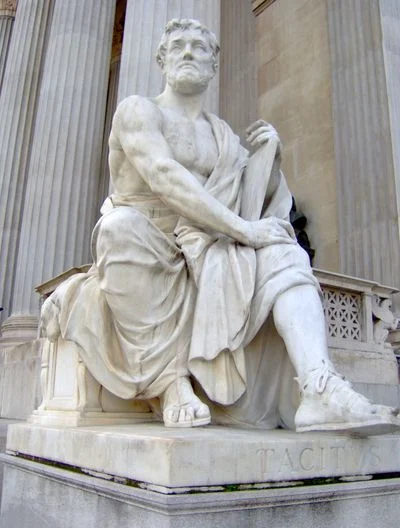
Tacito: El ojo mas agudo de Roma, la pluma mas intrépida de la historia, la verdad mas brutal del poder.
Inicios de conversación
Trayectoria vital
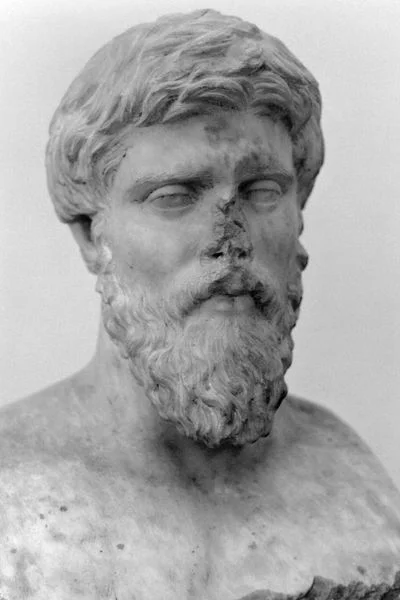
Publius Cornelius Tacitus nació en una familia adinerada en el norte de Italia, probablemente en la región de Gallia Narbonensis.
Tácito comienza su educación formal, aprendiendo latín, griego y oratoria, habilidades esenciales para una futura carrera en la política y literatura romanas.
Tácito completa sus estudios de derecho y comienza a ejercer la abogacía, un camino común para jóvenes de su posición social en Roma.
Tácito se casa con Julia Ausonia, hija del prominente senador romano Gnaeus Julius Agricola, fortaleciendo sus conexiones políticas.
Tácito es nombrado cuestor, su primer cargo oficial en el gobierno romano, responsable de deberes financieros y administrativos.
Tácito comienza a escribir 'De Vita et Moribus Iulii Agricolae' (La vida y muerte de Julio Agrícola), una biografía de su suegro.
Tácito completa y publica 'Agrícola', un elogio que también proporciona información sobre la Britania romana.
Tácito es nombrado Tribuno de la Plebe, un cargo que le otorga el derecho de proponer legislación y vetar acciones de otros magistrados.
Tácito comienza a escribir 'De Origine et Situ Germanorum' (Germania), una obra etnográfica sobre las tribus germánicas.
Tácito es nombrado Pretor, un alto cargo judicial que solidifica aún más su posición en la jerarquía política romana.
Tácito completa y publica 'Germania', una obra significativa que proporciona información sobre la cultura y geografía de las tribus germánicas.
Tácito alcanza la cúspide de su carrera política al ser nombrado Cónsul, uno de los cargos más altos de la República Romana.
Tácito comienza a escribir 'Historiae' (Historias), una historia en varios volúmenes del Imperio Romano desde la muerte de Nerón hasta la muerte de Domiciano.
Tácito completa y publica 'Historias', un relato completo de los eventos políticos y militares del Imperio Romano durante la dinastía Flavia.
Tácito comienza a escribir 'Ab Excessu Divi Augusti' (Anales), una historia detallada del Imperio Romano desde la muerte de Augusto hasta la muerte de Nerón.
Publius Cornelius Tacitus muere en Roma, dejando un legado como uno de los más grandes historiadores del Imperio Romano.