Quick Facts
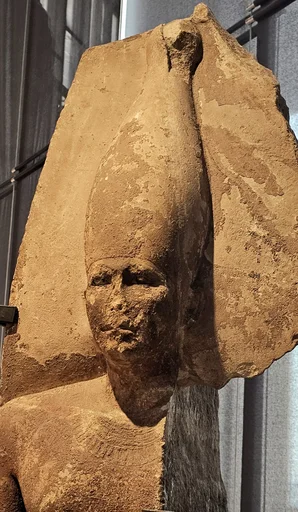
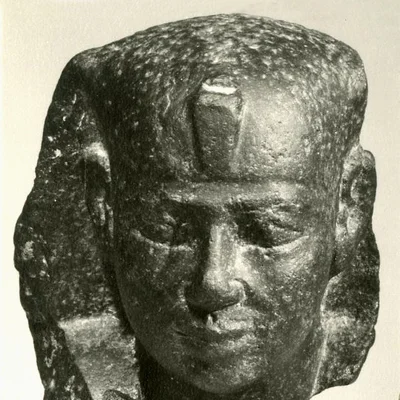
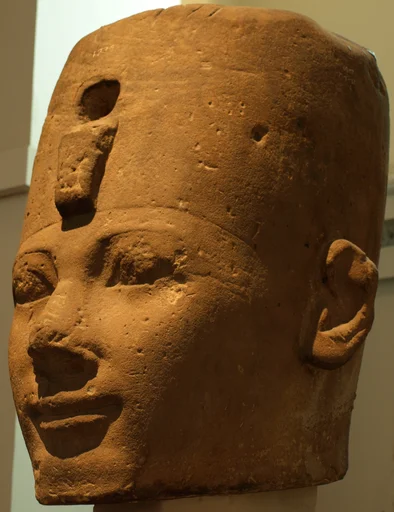
Warrior pharaoh who expanded Egypt's borders to unprecedented limits, reaching the Euphrates River and establishing the empire's military supremacy.
Conversation Starters
Life Journey
Thutmose was born into a military family in Thebes. Though not of direct royal blood, his father was a military commander, and he would rise through the ranks to eventually marry into the royal family.
Following in his father's footsteps, young Thutmose joined the Egyptian army and quickly demonstrated exceptional tactical abilities. His leadership skills caught the attention of the royal court.
Thutmose's military prowess led to his promotion to general. He commanded successful campaigns in Nubia, proving his worth as a warrior and leader capable of expanding Egypt's dominion.
Thutmose married Princess Ahmose, daughter of Ahmose I and sister of Amenhotep I. This marriage legitimized his position in the royal succession and connected him to the founding line of the Eighteenth Dynasty.
His daughter Hatshepsut was born to Queen Ahmose. She would become one of the most successful pharaohs in Egyptian history, though Thutmose could not have foreseen her remarkable future.
Upon the death of Amenhotep I, who had no surviving heirs, Thutmose ascended to the throne of Egypt. His coronation marked the beginning of a new era of military expansion and imperial ambition.
In his first year as pharaoh, Thutmose led a devastating campaign into Nubia, crushing a rebellion and extending Egyptian control deep into Kush. He personally slew the Nubian king in battle.
After his victories, Thutmose established a series of fortresses along the Nile in Nubia. He appointed a viceroy to govern the region, ensuring Egypt's permanent control over its southern territories.
Thutmose launched his most ambitious campaign, marching his army through Canaan and Syria to reach the Euphrates River. No Egyptian army had ever ventured so far north, marking the zenith of Egyptian expansion.
At the Euphrates River, Thutmose erected a victory stele marking the northernmost extent of Egyptian territory. He also conducted an elephant hunt in the region of Niya, demonstrating his prowess.
Thutmose began major construction projects at the Temple of Karnak, including the fourth and fifth pylons. He decorated the walls with scenes of his military victories and erected obelisks.
His grandson Thutmose III was born to his son Thutmose II and a secondary wife. This child would grow to become Egypt's greatest military pharaoh, surpassing even his grandfather's achievements.
Thutmose commissioned the construction of his tomb in the Valley of the Kings, becoming one of the first pharaohs to be buried in this remote valley. This established a tradition that would last for centuries.
Thutmose led another campaign into Syria to reinforce Egyptian control over the Levantine vassal states. He extracted tribute and renewed oaths of loyalty from the local rulers.
In his later years, Thutmose appointed his son Thutmose II as coregent to ensure a smooth succession. This arrangement allowed him to gradually transfer power while maintaining stability.
Thutmose I died after a reign of approximately thirteen years, leaving behind an empire that stretched from Nubia to the Euphrates. He was buried in the Valley of the Kings, though his mummy was later moved.