En bref
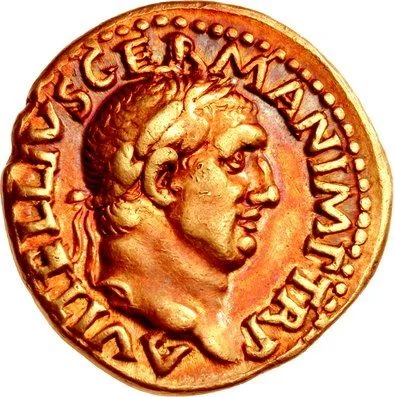
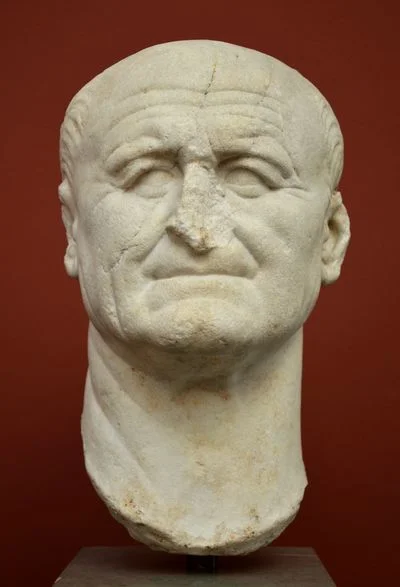
Constructeur du Colisée, fondateur de la dynastie flavienne, écraseur de la révolte — Vespasien régna sur Rome.
Sujets de conversation
Parcours de vie
Vespasien est né à Falacrina en territoire sabin.
Vespasien commence sa carrière militaire comme tribun militaire.
Vespasien sert comme questeur en Crète et Cyrénaïque.
Vespasien est élu édile à Rome.
Vespasien sert comme préteur.
Vespasien commande une légion lors de l'invasion de la Bretagne.
Vespasien est récompensé des ornements triomphaux pour la campagne britannique.
Vespasien obtient le consulat.
Vespasien sert comme proconsul d'Afrique.
Vespasien est nommé par Néron pour réprimer la révolte juive.
Vespasien capture Jotapata et reçoit la prophétie de Josèphe.
Vespasien suspend les opérations après le suicide de Néron.
Vespasien est proclamé empereur par les légions orientales.
Vespasien obtient l'empire avec la défaite de Vitellius.
Le fils Titus capture Jérusalem et détruit le Temple.
Vespasien célèbre le triomphe pour la guerre juive.
Vespasien commence la construction du Colisée.
Vespasien décède à Aquae Cutiliae avec ses célèbres derniers mots.