Datos rápidos
Un enigmático grabador del periodo Edo que retrató a los actores con un realismo audaz e implacable, y luego desapareció tras una carrera breve y fulgurante.
Inicios de conversación
Trayectoria vital
Se desconocen los detalles exactos de su nacimiento, pero muchos especialistas lo sitúan alrededor de mediados del siglo XVIII en el Japón de los Tokugawa. Teorías posteriores lo vincularon al mundo del teatro Noh al servicio del dominio de Awa, lo que sugiere una vida marcada por la cultura escénica.
De joven en Edo, probablemente conoció los bulliciosos barrios de entretenimiento alrededor de Nihonbashi y las calles teatrales de la ciudad. La exposición constante al kabuki y al Noh influiría después en su aguda atención al gesto, el rostro y la persona.
Una hipótesis destacada lo identifica con Saito Jurobei, un actor de Noh vinculado al dominio de Awa Tokushima, que mantenía residencias en Edo. De ser cierto, esto conectaría su mirada artística con tradiciones escénicas de élite y con la disciplina de un intérprete acostumbrado a las máscaras y a la expresión.
Mucho antes de cualquier estampa firmada, probablemente desarrolló el hábito de estudiar a los intérpretes de cerca y separar el glamour público de la tensión privada. Este periodo coincide con el pujante mercado de estampas de Edo, donde la innovación en imágenes de actores competía por atraer compradores.
Editores, talladores e impresores de Edo intensificaron la producción mientras las estampas de actores y las imágenes de bellezas circulaban ampliamente entre la población urbana. La obra posterior de Sharaku entraría en un campo abarrotado, moldeado por figuras como Kitagawa Utamaro y por convenciones ya establecidas del retrato de actores.
Las reformas Kansei del shogunato Tokugawa impusieron una regulación moral más estricta y presiones cambiantes sobre editores y artistas del entretenimiento. En este clima, la sátira audaz y el realismo severo en retratos de actores podían ser comercialmente arriesgados, aun cuando el público ansiaba novedades.
Sharaku irrumpió en 1794 cuando el influyente editor Tsutaya Juzaburo lanzó sus retratos de actores. Esta colaboración lo situó en el centro de la red comercial de estampas de Edo, con talladores e impresores expertos materializando sus diseños severos.
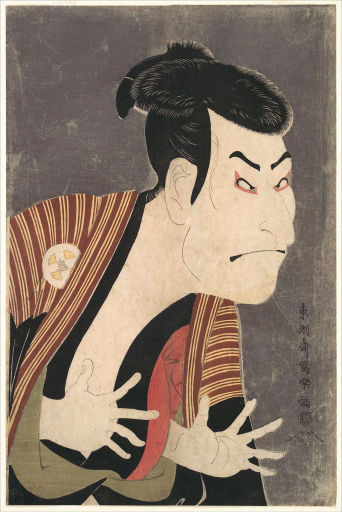
Su primera serie enfatizó cabezas sobredimensionadas y un espacio comprimido, obligando al espectador a una confrontación íntima con el rostro del actor. En lugar de idealizar, resaltó tensión, arrogancia, fatiga y cálculo: psicología convertida en línea y color.
Representó a intérpretes destacados de teatros de Edo como el Nakamura-za y el Ichimura-za, captando papeles emblemáticos de montajes en cartelera. Cada estampa funcionaba como una reseña incisiva, transformando la celebridad escénica en un estudio de ambición y carácter bajo presión.
Es posible que los compradores contemporáneos consideraran sus retratos demasiado implacables, carentes del encanto idealizado esperado en las estampas de actores. Aquello mismo que hoy se valora —realismo sin maquillaje e individualidad mordaz— pudo limitar las ventas en el competitivo mercado de Edo.
Tras la primera etapa de retratos de gran cabeza, sus diseños pasaron a cabezas más pequeñas y figuras más completas, quizá como respuesta a la recepción del mercado y a los costos de producción. El cambio muestra una negociación pragmática con las expectativas editoriales sin perder su intensidad expresiva.
Algunos retratos emplearon fondos brillantes de mica que elevaban las estampas a la categoría de bienes de lujo, exigiendo impresión experta y manipulación cuidadosa. Estos efectos costosos demuestran que el taller de Tsutaya apostó por Sharaku como artista principal pese a una demanda incierta.
A comienzos de 1795 cesan los nuevos diseños de Sharaku, creando una de las desapariciones más célebres de la historia del arte japonés. Las explicaciones van desde ventas insuficientes y nuevas presiones de censura hasta la posibilidad de que regresara a obligaciones en un entorno teatral.
Aunque ausente de los registros, sus estampas siguieron circulando entre conocedores y comerciantes a medida que maduraba el mercado de Edo. La supervivencia de impresiones de alta calidad sugiere una preservación cuidadosa en colecciones privadas que valoraban un retrato inusual y contundente.
A medida que el ukiyo-e fue catalogado y discutido de forma más sistemática, la brevedad de su trayectoria se convirtió en objeto de especulación entre investigadores japoneses y, más tarde, extranjeros. La falta de datos biográficos transformó su obra en un enigma enmarcado por la historia del teatro y los registros editoriales.
Con el auge del japonismo y del coleccionismo museístico, los retratos de actores de Sharaku ganaron fama por su fuerza psicológica de aspecto moderno. Especialistas compararon su realismo severo con tradiciones de retrato de otros lugares, elevándolo de curiosidad menor a maestro canónico del ukiyo-e.