Quick Facts
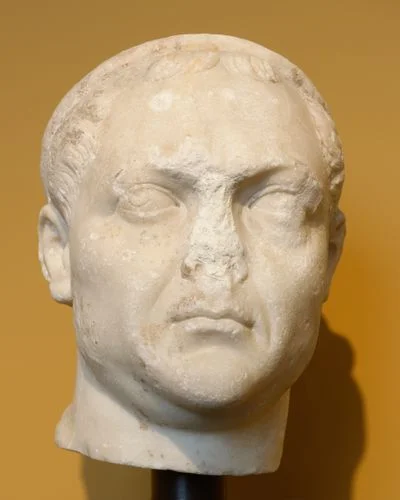
Briefly emperor, thoroughly glutton. Year of Four Emperors' least memorable.
Conversation Starters
Life Journey
Aulus Vitellius was born to Lucius Vitellius and his wife, Sabinilla, in Rome, into a prominent senatorial family.
Vitellius starts his military service, serving under various Roman legions, building a reputation for his administrative skills and loyalty.
Vitellius is appointed as the governor of the Roman province of Africa, where he demonstrates effective leadership and administrative capabilities.
Vitellius is elected to the Roman Senate, marking a significant step in his political career and increasing his influence in Roman politics.
Vitellius reaches the pinnacle of Roman political life by becoming a consul, one of the highest offices in the Roman Republic.
Vitellius marries Galeria Fundana, a woman from a distinguished Roman family, solidifying his social and political standing.
Vitellius is appointed as the governor of Lower Germany, a strategic and challenging position that further enhances his military and political experience.
Vitellius gains favor with Emperor Nero by supporting his reforms and policies, which helps to secure his position and influence within the imperial court.
Vitellius is appointed as a legate, a high-ranking military commander, further solidifying his role in the Roman military hierarchy.
Following the death of Emperor Nero, political instability ensues, and Vitellius begins to position himself for a potential claim to the throne.
Vitellius is proclaimed Emperor by the legions in Lower Germany, marking the beginning of his brief and tumultuous reign during the Year of the Four Emperors.
Vitellius enters Rome as the new Emperor, but his reign is marked by internal strife and external threats from rival claimants.
Vitellius' forces are defeated by the armies of Vespasian at the Battle of Bedriacum, signaling the end of his reign.
Vitellius is deposed and executed by Vespasian's supporters, marking the end of his short and controversial reign as Roman Emperor.