Quick Facts
Pioneering Nihonga master who fused Japanese tradition with modern vision, shaping national art identity in turbulent times.
Conversation Starters
Life Journey
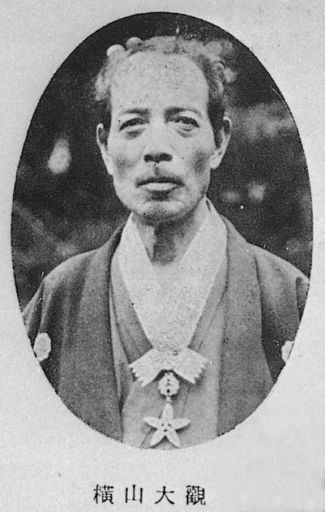
Born as Yokoyama Hidemaro in the closing months of 1868, as Japan rapidly modernized under the Meiji government. The social upheaval and new institutions of the era later shaped his resolve to defend Japanese artistic tradition.
As a teenager he relocated to Tokyo, where new Meiji schools and exhibitions were redefining what “modern” art meant. He began serious training in traditional painting while absorbing the city’s debates about Westernization and identity.
He enrolled at the Tokyo Fine Arts School, the elite institution founded to modernize Japan’s arts education. There he studied under influential teacher Hashimoto Gaho and encountered reformist ideas promoted by Okakura Kakuzo (Tenshin).
After completing his studies, he was retained as a teacher at the Tokyo Fine Arts School, reflecting early recognition of his talent. Working within the academy placed him at the center of national arguments over preserving yamato-e and Kano traditions.
He aligned closely with Okakura Kakuzo, who urged a revitalized Japanese painting able to stand beside Europe’s academies. Taikan’s friendships with Hishida Shunso and other young painters formed a cohort that would later define Nihonga.
Experimenting with softened outlines and atmospheric modeling, he pursued what critics dubbed morotai, or “vague style.” The approach challenged line-based orthodoxy and sparked heated reviews in Tokyo, yet it opened new expressive possibilities in Nihonga.
When Okakura Kakuzo was pushed out amid political and administrative disputes, Taikan and allied artists were also dismissed. The rupture forced him to build an independent career and deepened his commitment to a nationalist vision of Japanese painting.
Together with Okakura Kakuzo and fellow painters such as Hishida Shunso, he helped establish the Nihon Bijutsuin as an alternative to state-controlled art systems. The institute promoted bold experimentation within tradition and became the stronghold of Nihonga reform.
Regular exhibitions organized by the Nihon Bijutsuin gave him a national stage and a network of patrons. His landscapes and figure compositions demonstrated how new shading and color harmonies could modernize Japanese painting without abandoning its spirit.
During the early 1900s he traveled overseas, encountering European museums and the international art market as Japan expanded its diplomacy. The experience sharpened his sense that Nihonga needed both technical innovation and a confident national narrative to compete abroad.
Japan’s Ministry of Education launched the Bunten exhibitions to standardize and publicize modern art, drawing artists into official cultural policy. Taikan navigated this arena while maintaining ties to the Nihon Bijutsuin, shaping public taste for modern Japanese painting.
He journeyed in Asia at a time when Japanese intellectuals argued for cultural kinship and leadership in the region. Seeing historic sites and Buddhist imagery firsthand encouraged grand, contemplative works that linked landscape to civilizational memory.
The early death of Hishida Shunso removed a key partner in the Nihonga reform movement and marked an emotional turning point. Taikan carried forward their experimental legacy, increasingly emphasizing monumental landscapes and a solitary, meditative tone.
With Okakura Kakuzo’s circle changing and senior figures passing, Taikan’s influence within the Nihon Bijutsuin grew more pronounced. He helped steer exhibitions, mentoring younger painters and consolidating a recognizable modern Nihonga style for a wider public.
As Japan entered an era of intensified nationalism following the Manchurian Incident, cultural figures faced pressure to support state ideology. Taikan produced prestigious paintings and public-facing projects that were praised as embodying Japanese spirit and destiny.
With the outbreak of the Second Sino-Japanese War, exhibitions and commissions increasingly served propaganda and morale. Taikan’s stature made his works symbolic cultural assets, and his themes of landscape and endurance were framed as national encouragement.
After Japan’s surrender, artists associated with prewar nationalism faced scrutiny as the country rebuilt under Allied occupation. Taikan continued painting, and his reputation shifted toward technical mastery and historical importance rather than wartime cultural symbolism.
He died in 1958 after decades as a central figure in Japan’s modern painting establishment and the Nihon Bijutsuin. His legacy endured through museum collections, students, and the continuing idea that Japanese painting could be both traditional and modern.