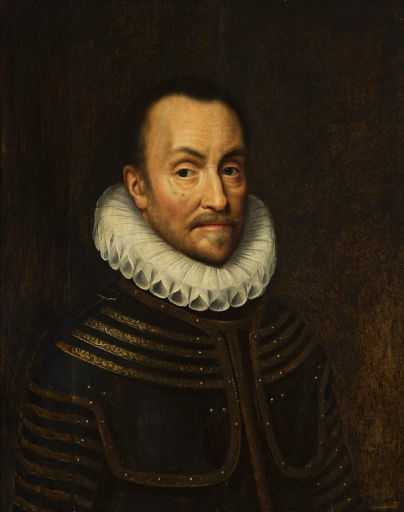
A shrewd Dutch rebel-statesman who challenged Habsburg rule and became the founding father of the Netherlands.
对话开场白
人生历程
Born at Dillenburg Castle to William the Rich and Juliana of Stolberg, he entered a major German-Dutch noble network. His family’s lands and connections positioned him early for high politics in the Low Countries.
After cousin René of Chalon died, he inherited Orange and extensive properties in the Netherlands, transforming him into a leading magnate. Emperor Charles V required him to be educated at the Habsburg court as a condition of succession.
Sent to Brussels, he was trained in courtly politics, languages, and military affairs under Habsburg supervision. Immersion among imperial advisers taught him how patronage, propaganda, and confessional tensions shaped governance.
His marriage to Anna of Egmond brought wealth and key ties to Holland and Zeeland’s noble circles. The union strengthened his standing among provincial elites whose cooperation later proved crucial in organizing resistance.
He rose quickly in Habsburg service and held senior command responsibilities during wars with France. Campaign experience, logistics, and negotiating with allies sharpened skills he later redirected toward the Dutch Revolt.
He witnessed Emperor Charles V’s abdication ceremonies, a pivotal transition to Philip II’s rule over the Netherlands. The change heightened fears of centralization and harsher religious enforcement, setting the stage for future conflict.
Philip II appointed him stadtholder, giving him immense authority in three vital provinces. The office placed him at the intersection of local privileges and royal policy, where tensions over taxation and heresy prosecutions intensified.
He married Anna of Saxony, linking him to powerful Protestant-leaning German princely circles. The marriage was politically useful but personally fraught, reflecting how dynastic alliances were entangled with confessional divides.
As iconoclastic riots erupted, he tried to keep order while urging moderation toward Protestants and respect for local privileges. The upheaval exposed the fragility of Habsburg authority and the radicalization of opposition groups.
The Duke of Alba arrived with Spanish troops and established the Council of Troubles, targeting nobles and dissenters. Facing arrest and confiscation, he fled and began organizing armed resistance with support from German allies.
He financed invasions into the Netherlands to challenge Alba’s regime, marking a major opening phase of the revolt. Although early efforts struggled militarily, they signaled determination to resist Spanish rule and repression.
The Sea Beggars’ capture of Brielle triggered widespread rebellion in Holland and Zeeland, and towns rallied to his cause. He returned as a political-military focus for resistance, working through the States of Holland to legitimize authority.
After mutinous Spanish troops sacked Antwerp, outrage enabled a broad coalition of provinces to demand their withdrawal. The Pacification of Ghent briefly united Catholics and Protestants under a shared program of restoring privileges and peace.
Northern provinces formed the Union of Utrecht to coordinate defense, governance, and the revolt’s political framework. He supported the union as the best chance to preserve unity while managing deep religious and regional differences.
Philip II issued a ban declaring him an outlaw and offering a reward for his death, intensifying the conflict personally. He replied with an Apology defending resistance and religious toleration, using print to shape European opinion.
The States-General issued the Act of Abjuration, formally rejecting Philip II as sovereign of the Netherlands. He helped steer the legal and ideological argument that rulers who violate subjects’ rights may be lawfully deposed.
A would-be assassin, Jean Jaureguy, shot him at close range, leaving him severely wounded but alive. His survival became a rallying symbol, while the threat highlighted how Philip II’s ban encouraged targeted violence.
He married Louise de Coligny, daughter of the French Huguenot leader Gaspard de Coligny, deepening Protestant and French connections. The match aimed to broaden diplomatic support as Spanish pressure mounted across the provinces.
Balthasar Gerard shot him at the Prinsenhof after gaining access through deception, fulfilling the bounty encouraged by Philip II’s ban. His death shocked the revolt, but leadership passed on and his legacy endured as a national founder.