En bref
Sultan ottoman réformateur qui lança l’ère des Tanzimat, cherchant à concilier modernisation, diplomatie et crise impériale.
Sujets de conversation
Parcours de vie
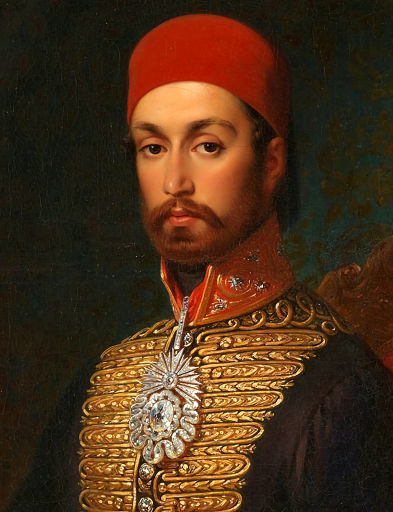
Né sous le nom de Şehzade Abdülmecid au palais de Topkapı, fils du sultan Mahmoud II et de Bezmialem Sultan. Il grandit au milieu des guerres et des bouleversements administratifs qui poussèrent la cour vers la réforme et la centralisation.
Il reçut une éducation en turc ottoman, en arabe et en persan, tout en apprenant l’étiquette de cour et l’art de gouverner à Istanbul. Les responsables de Mahmoud II l’initièrent à de nouvelles idées militaires et bureaucratiques inspirées de modèles européens.
En tant que prince, il observa le tournant ottoman vers le commerce et la diplomatie européens, dans le climat qui mena notamment aux arrangements commerciaux de Balta Liman avec le Royaume-Uni. Ces évolutions influencèrent ensuite les débats sur la souveraineté et les finances.
Il devint sultan après la mort de Mahmoud II, héritant de la crise de la rébellion de Méhémet Ali Pacha et d’une forte tension militaire. Le jeune souverain s’appuya largement sur des réformateurs chevronnés, en particulier Mustafa Reşid Pacha, pour stabiliser l’État.
Le rescrit impérial fut proclamé au parc de Gülhane sous la conduite de Mustafa Reşid Pacha. Il promettait une fiscalité plus régulière, des règles de conscription et la sécurité des personnes et des biens afin de restaurer la légitimité dans tout l’empire.
Les puissances européennes poussèrent Méhémet Ali Pacha à se retirer, redéfinissant la diplomatie ottomane après la convention de Londres. Le gouvernement d’Abdülmecid apprit à manœuvrer dans la politique des grandes puissances tout en cherchant à réaffirmer son autorité en Syrie et au-delà.
La convention de 1841 réaffirma la fermeture du Bosphore et des Dardanelles aux navires de guerre étrangers en temps de paix. Elle échangeait une part d’autonomie contre des garanties de sécurité plus larges, inscrivant la survie ottomane dans le système des traités européens.
La cour intensifia ses relations avec des missions religieuses et diplomatiques européennes, affichant une nouvelle image publique de l’empire. Les réformes cérémonielles et le style de cour mirent en avant une monarchie modernisatrice, malgré des résistances internes persistantes.
Les conseils et ministères des Tanzimat s’étendirent, visant à standardiser le gouvernement d’Istanbul aux provinces. Les réformateurs cherchèrent un droit et une fiscalité plus prévisibles, mais les notables locaux et l’application inégale limitèrent la rapidité des transformations.
Le mécénat de cour, les coûts militaires et les programmes de réforme pesèrent sur le trésor, imposant de nouveaux emprunts et des mesures de recettes. Les ministres débattirent des moyens de financer écoles, administration et infrastructures sans provoquer de rejet dans les provinces.
Après l’aggravation des différends sur la protection des lieux saints et l’influence dans les Balkans, les forces ottomanes subirent la pression russe. Le gouvernement d’Abdülmecid rechercha l’appui britannique et français, transformant un conflit régional en guerre majeure.
Le Royaume-Uni et la France s’allièrent officiellement à l’Empire ottoman, et Istanbul contracta ses premiers grands emprunts étrangers pour financer la guerre. Ces emprunts assurèrent une survie à court terme mais aggravèrent la dépendance durable envers les créanciers européens.
Alors que les armées alliées opéraient autour de la mer Noire, les dirigeants ottomans subirent une surveillance internationale accrue sur la gouvernance et les droits des minorités. Les réformateurs soutinrent que des garanties juridiques renforceraient la loyauté des Arméniens, des Grecs et d’autres communautés.
Promulgué sous une forte pression diplomatique britannique et française après la guerre, l’édit promit une égalité civile plus large aux non-musulmans. Il aborda les tribunaux, la fiscalité et l’accès aux charges publiques, tout en suscitant ressentiment conservateur et controverses.
Le traité de Paris mit fin à la guerre de Crimée et intégra formellement l’Empire ottoman au système des États européens. Il offrit un répit diplomatique, sans supprimer l’instabilité intérieure ni les fragilités financières de l’empire.
De nouvelles écoles, ou réformées, visèrent à former des administrateurs familiers du droit moderne et de l’art de gouverner, en complément des ministères des Tanzimat. Istanbul poursuivit une formation centralisée, mais l’accès provincial et la qualité restèrent inégaux dans l’empire.
Alors que des factions se disputaient l’influence, les réformateurs peinèrent à maintenir l’élan face aux dettes de guerre et aux tensions sociales. Abdülmecid tenta d’arbitrer entre conservateurs et modernisateurs, s’appuyant souvent sur des coalitions ministérielles changeantes.
Il mourut au palais de Dolmabahçe, laissant un empire en pleine transition, accablé par la dette et les engagements internationaux. Son frère Abdülaziz lui succéda, héritant des institutions des Tanzimat et des défis non résolus qu’elles avaient créés.