Chumi
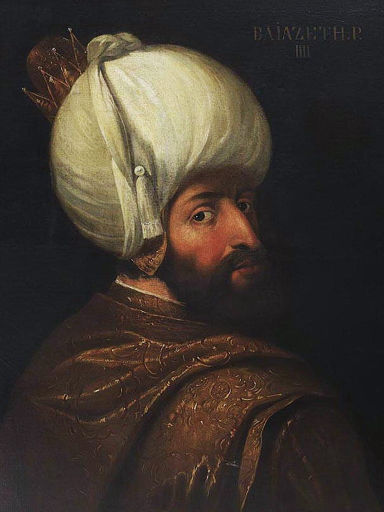
Bayezid I

Bayezid I

Ottoman Sultan

Start Chat

AI Personality

Quick Facts

Rapid Ottoman expansion in the Balkans and Anatolia
Battle of Nicopolis victory
Sieges of Constantinople

Life Journey

1360Born into the Ottoman dynasty

Born to Sultan Murad I and Gulsah Hatun, Bayezid grew up within the Ottoman court as the state pushed into the Balkans. He was educated in Islamic governance and warfare, preparing for command in Rumelia and Anatolia.

1374Appointed a provincial governor and field commander

As a teenage prince, Bayezid was assigned administrative duties typical for Ottoman heirs, learning taxation, justice, and frontier logistics. He also began leading cavalry forces, building a reputation for speed and aggressive campaigning.

1378Marriage alliance with the Germiyanids

Bayezid married Devlet Shah Khatun, a princess of the Germiyanid beylik, linking Ottoman power to a key Anatolian rival. The dowry reportedly transferred strategic towns, helping the Ottomans expand influence toward western Anatolia.

1386Rises as a leading commander in Balkan wars

During Murad I’s Balkan campaigns, Bayezid commanded fast-moving forces that exploited gaps in enemy lines and secured routes for the main army. His battlefield style earned him the epithet “Yildirim,” meaning “the Thunderbolt.”

1389Succeeds Murad I after the Battle of Kosovo

After Murad I was killed at Kosovo, Bayezid swiftly asserted authority amid chaos on the battlefield. He ordered the execution of his brother Yakub to prevent factional civil war, then secured the army’s loyalty and the throne.

1390Begins rapid annexations of Anatolian beyliks

Bayezid moved against Turkish principalities in Anatolia, absorbing territories through pressure, diplomacy, and force. These conquests reduced the autonomy of beyliks like Aydin and Saruhan, tightening Ottoman control over western Anatolia.

1391First major siege tightening around Constantinople

Bayezid escalated pressure on Byzantine Emperor Manuel II Palaiologos by tightening blockades and demanding concessions. Ottoman positions around the city signaled a long-term strategy to dominate the Bosporus and isolate Byzantine diplomacy.

1393Consolidates control over Bulgarian territories

Ottoman armies advanced into the Bulgarian realms, undermining local rulers and drawing key fortresses into a tributary system. By placing garrisons and loyal administrators, Bayezid strengthened Ottoman depth in the lower Danube region.

1394Builds Anadolu Hisari to control the Bosporus

Bayezid ordered the fortress of Anadolu Hisari on the Asian shore to restrict shipping and pressure Constantinople. The stronghold improved Ottoman strategic mobility and demonstrated a permanent commitment to encircling the Byzantine capital.

1395Extends authority into Wallachian frontier conflicts

Bayezid pushed Ottoman influence northward, clashing with Wallachian forces under Mircea the Elder in difficult terrain. These frontier fights exposed limits of cavalry-heavy campaigning and highlighted the Danube’s role as a contested boundary.

1396Wins the Battle of Nicopolis against a crusade

A major crusading army led by King Sigismund of Hungary and French nobles attacked Ottoman positions at Nicopolis. Bayezid’s disciplined deployment and timely counterattack shattered the crusaders, cementing Ottoman prestige across Europe.

1397Reasserts Ottoman dominance in Greece and Thessaly

Following Nicopolis, Bayezid directed campaigns that intensified Ottoman authority over Balkan vassals and contested Greek territories. By extracting tribute and enforcing obedience, he stabilized supply lines and secured routes to key Aegean ports.

1398Annexes Karaman and deepens Anatolian unification

Bayezid targeted the powerful Karamanids, long-time rivals in central Anatolia, and forced major concessions. The campaign alarmed other beyliks and drew the attention of Timur, who claimed to protect displaced rulers and political order.

1400Faces Timur’s growing threat in eastern Anatolia

Timur advanced westward after victories in the Middle East, receiving petitions from Anatolian beyliks Bayezid had subdued. Diplomatic exchanges hardened into rivalry, as both rulers competed for legitimacy, tribute networks, and strategic cities.

1402Defeated and captured at the Battle of Ankara

Bayezid met Timur near Ankara, but defections by some Anatolian contingents and Timur’s tactical flexibility broke the Ottoman army. Bayezid was captured, and the defeat fractured central authority, opening the Ottoman Interregnum among his sons.

1403Dies in captivity as the empire fractures

Held after Ankara, Bayezid died while the Ottoman realm splintered between claimants such as Suleiman, Isa, Musa, and Mehmed. His death deepened uncertainty, yet the institutions he expanded later enabled reunification under Mehmed I.

Chat