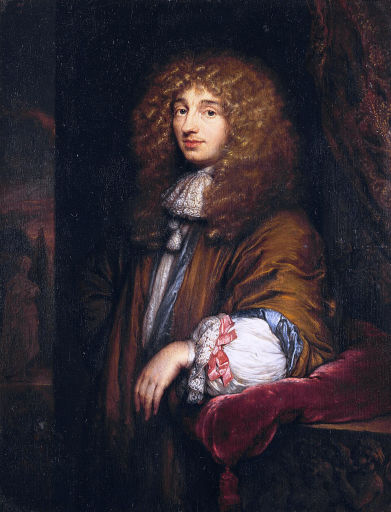
Quick Facts
A brilliant Dutch polymath who refined timekeeping, explained light as waves, and discovered Saturn’s moon Titan.
Conversation Starters
Life Journey
Born to diplomat and poet Constantijn Huygens and Susanna van Baerle, he grew up amid The Hague’s learned circles. The Dutch Republic’s Golden Age culture encouraged his early mathematics and languages.
He entered Leiden University to study law and mathematics, benefiting from the Republic’s strong scientific networks. His talent for geometry emerged alongside an interest in practical instruments and measurement.
At the College of Orange, he deepened mathematical training and encountered modern Cartesian ideas spreading through Europe. The experience sharpened his ambition to connect abstract theory with mechanical devices.
His first publications demonstrated advanced skill with classical geometry, earning attention among European mathematicians. He began corresponding within the Republic’s intellectual elite and building a reputation beyond law.
Using improved telescopes he helped design and grind, he identified Titan, Saturn’s largest moon, expanding known planetary systems. His observations challenged confusing earlier reports of Saturn’s changing “appendages.”
He devised a pendulum-regulated clock to dramatically improve accuracy, inspired by Galileo’s pendulum insights. Reliable timekeeping promised practical benefits for astronomy and, eventually, longitude determination at sea.
He obtained a patent and worked with clockmaker Salomon Coster to produce the first practical pendulum clocks. The new design reduced daily error to seconds, transforming precision measurement across Europe.
In Saturnium Systema, he argued Saturn is surrounded by a thin, flat ring, resolving decades of telescopic confusion. The work showcased how instrument improvements and careful geometry could settle celestial debates.
He visited London and engaged with leading natural philosophers connected to the Royal Society, expanding his international network. These exchanges strengthened his interest in shared experiments and standardized observations.
His achievements in astronomy and timekeeping led to election as a Fellow of the Royal Society. The honor linked him to a growing transnational community that valued experiment, correspondence, and publication.
Invited under Louis XIV’s patronage, he became a founding member of the Académie des Sciences and received a royal pension. In Paris he collaborated with scholars like Jean-Baptiste Colbert’s scientific circle.
He pursued refinements to clock escapements and discussed portable timekeepers for navigation, a critical problem for Dutch and French maritime powers. Experiments revealed how motion, temperature, and humidity disrupted precision.
Horologium Oscillatorium united pendulum clock design with deep mathematics, including the tautochrone and cycloid. It also advanced dynamics by analyzing motion and forces with a rigor that influenced later mechanics.
He developed the idea that each point on a wavefront emits secondary waves, a geometric method later called Huygens’ principle. This approach offered a powerful explanation for reflection and refraction in optics.
Recurring health problems and a less welcoming climate for Protestants pushed him to depart France for the Dutch Republic. The move ended a highly productive Paris period tied to the Academy’s early prestige.
In Traité de la lumière, he argued light propagates as waves through an ether and explained double refraction in Iceland spar. The treatise became a cornerstone of wave optics, later developed by Fresnel.
Cosmotheoros speculated about life on other worlds using comparative reasoning from astronomy and natural philosophy. It reflected a late-career blend of science and imagination characteristic of the Scientific Revolution.
He died in The Hague after years of fragile health, leaving influential results in mechanics, optics, astronomy, and timekeeping. His ideas shaped European science from Newton’s era into the later age of precision.