Quick Facts
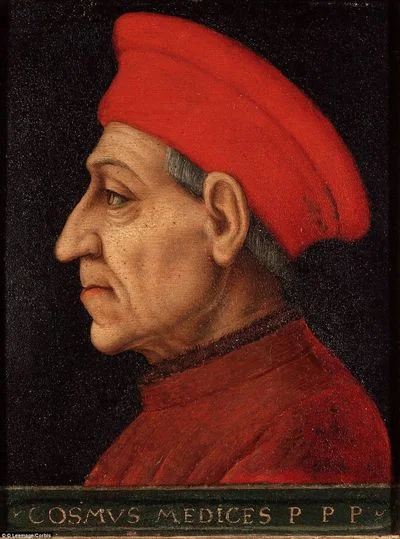
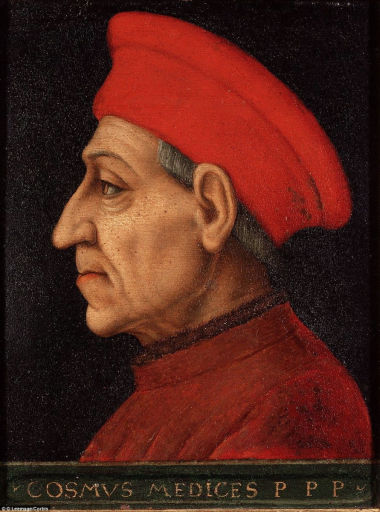
Florentine banker-statesman who quietly mastered republican politics, funding Renaissance art, scholarship, and Medici power.
Conversation Starters
Life Journey
Born in Florence to Giovanni di Bicci de' Medici and Piccarda Bueri, he entered a household rising through commerce and credit. The city’s guild politics and rival oligarchs shaped his earliest lessons in power.
As a teenager he learned accounting, exchange, and correspondence used by the Medici Bank across Europe. He also observed how Florentine alliances were brokered through marriages, loans, and civic offices.
Working closely with Medici operations linked to the Curia, he expanded relationships with church officials and Roman financiers. These networks later helped the bank profit from papal revenues and international transfers.
When Giovanni di Bicci died, Cosimo and his brother Lorenzo assumed leadership of a fast-growing financial empire. He tightened managerial controls and used trusted agents to run branches from Florence to northern Europe.
During the costly conflict with Lucca, Florence relied on large loans and liquidity from leading bankers, including the Medici. Cosimo’s support increased his leverage while exposing him to attacks by rival Albizzi factions.
Rinaldo degli Albizzi and allies accused him of seeking tyranny and had him imprisoned in the Palazzo Vecchio. Through negotiation and influence, he avoided execution, but the Signoria sentenced him to exile.
He relocated to Venice, where he maintained correspondence and credit lines that kept the Medici Bank functioning. Venetian elites welcomed his capital, while Florentine politics destabilized without Medici mediation.
A shift in Florentine councils brought a pro-Medici Signoria to power, reversing his sentence and calling him home. His return forced Rinaldo degli Albizzi into exile and marked the start of Medici dominance in practice.
He avoided overt titles, instead shaping elections, committees, and tax policy through loyal networks within the republic. Public works and charitable spending helped present Medici leadership as service to the comune.
He backed projects associated with Filippo Brunelleschi, including work at San Lorenzo and Medici building initiatives that signaled taste and legitimacy. Architecture became a public language of stability after years of factional conflict.
The Church council drew Pope Eugene IV, Byzantine Emperor John VIII Palaiologos, and Greek clerics into Florence. The event enhanced the city’s reputation and helped Cosimo connect diplomacy, finance, and cultural exchange.
He financed the library at the Dominican convent of San Marco, drawing on the manuscript collection associated with humanist Niccolo Niccoli. By expanding access to texts, he strengthened Florence’s role as a center of scholarship.
With the election of Pope Nicholas V, a humanist pontiff, papal financial business became a crucial arena for major bankers. The Medici network profited from transfers and deposits, reinforcing Cosimo’s European reach and influence.
After decades of warfare, Florence joined Milan and Venice in the Peace of Lodi, stabilizing northern Italy. Cosimo favored diplomacy and alliances to protect trade routes, banking interests, and Florentine security.
Pope Pius II’s visit brought ceremonies and high-level negotiations that showcased Florence’s civic identity. Cosimo used the occasion to demonstrate that Medici leadership aligned with the city’s international standing and piety.
He supported the young scholar Marsilio Ficino and encouraged translations of Greek philosophical texts into Latin. This patronage helped spark Florentine Platonism, linking classical learning to Christian humanist ideals.
He died after decades of guiding Florentine policy from behind the scenes, leaving power to his son Piero di Cosimo de' Medici. The Signoria honored him as Pater Patriae, recognizing his lasting imprint on the republic.