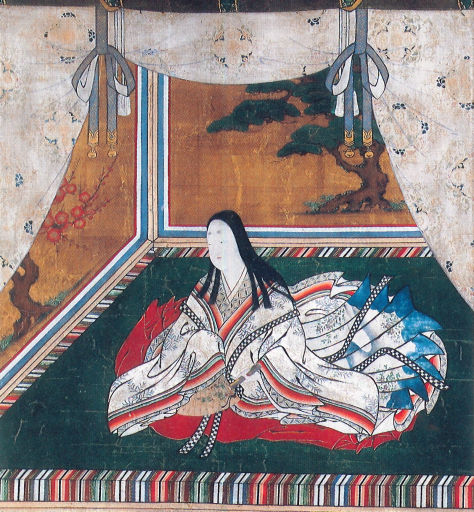
Quick Facts
A principled Nara-era ruler who stabilized succession, strengthened state institutions, and championed court culture and Buddhist patronage.
Conversation Starters
Life Journey
Born as Princess Obito, she was the daughter of Prince Kusakabe and Empress Genmei, in an elite Yamato lineage. Raised amid ritsuryo reforms and continental-style court culture, she learned ceremony, law, and Buddhist etiquette early.
After Emperor Tenmu died, succession struggles reshaped court factions around princes, ministers, and consort families. The instability heightened the importance of Princess Obito’s maternal line, which soon anchored legitimacy at court.
Under Empress Jito, the court refined codes, land registers, and ceremonial ranks modeled on Tang institutions. Princess Obito grew up watching female sovereign authority exercised publicly, a precedent that later supported her own accession.
Emperor Monmu’s enthronement elevated her sibling generation within the imperial household and the emerging Fujiwara-linked bureaucracy. The court continued codifying administration and taxation, giving her firsthand exposure to state-building politics.
The Taiho Code formalized ministries, ranks, and provincial administration, shaping the environment in which she navigated palace life. As the court emphasized documentation and precedent, she absorbed the discipline of governance and ritual order.
When Emperor Monmu died, his heir was still young, creating urgency for a stabilizing sovereign. Empress Genmei, Obito’s mother, took the throne to safeguard succession and maintain continuity in the ritsuryo state.
Heijo-kyo (Nara) was established as a planned capital inspired by Chang’an, with grid avenues and major temples. Court life became more institutionalized there, and Princess Obito operated within a growing bureaucratic and religious center.
The Kojiki was presented by O no Yasumaro, drawing on traditions recited by Hieda no Are to preserve imperial myth-history. Its compilation reflected the court’s desire to legitimize rule through narrative, ritual, and remembered genealogy.
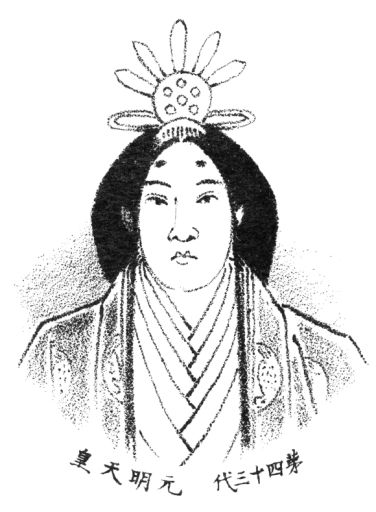
Empress Genmei abdicated and Princess Obito ascended as Empress Regnant Gensho to protect the young heir, Prince Obito (later Emperor Shomu). Her accession balanced powerful court houses while keeping succession within the direct line.
Her court strengthened provincial administration through clearer reporting and enforcement of ranks, taxes, and corvee obligations. By supporting officials in the central ministries, she aimed to reduce disorder and reaffirm ritsuryo procedures in the provinces.
A severe famine and epidemics struck Japan, straining granaries and local communities across provinces. The court promoted relief measures and Buddhist rites for protection, reflecting how governance blended practical aid with religious statecraft.
The Nihon Shoki was compiled under Prince Toneri and presented as a state chronicle in classical Chinese style. Its polished narrative supported diplomacy and legitimacy, linking the Yamato house to sacred origins and orderly rule.
She promoted court ceremonies and Buddhist observances that reinforced imperial authority in a new capital society. Temples and clerics gained influence as the court used sutra recitations and offerings to display protection of the realm.
The court supported expanded cultivation by encouraging reclamation and better use of fields, tying productivity to state stability. Such measures fit the ritsuryo emphasis on registers and revenue, while addressing lingering shortages after earlier crises.
She abdicated so her nephew, Emperor Shomu, could rule in his own right once succession was secure. The transition preserved continuity and avoided factional conflict, while she retained prestige as a senior figure at the Nara court.
In retirement, she remained a respected presence as Fujiwara leaders gained greater prominence through marriage and office. Her experience as a reigning empress offered political weight, even as day-to-day power shifted to the reigning monarch’s circle.
Rebellions and political turmoil, including threats in the provinces, challenged the authority of the Nara government. As the court reacted with relocations and crackdowns, her earlier focus on orderly succession appeared increasingly prudent.
She died after decades as both sovereign and retired empress, having helped bridge fragile succession into Emperor Shomu’s era. Remembered for careful stewardship and courtly piety, she left a legacy intertwined with Nara’s institutions and histories.