Quick Facts
Kafka: Master of the absurd, "The Metamorphosis" and existential dread.
Conversation Starters
Life Journey
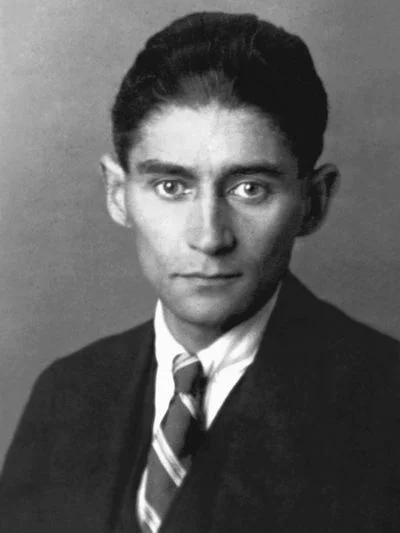
Franz Kafka was born into a middle-class German-speaking Jewish family in Prague. His father Hermann was a domineering merchant whose influence shaped Kafka's psychology.
Kafka entered the rigorous German-language Altstädter Gymnasium, where he excelled academically despite feeling isolated and anxious.
Kafka enrolled at Charles University, initially studying chemistry before switching to law at his father's insistence. He attended lectures on literature and art history.
Kafka received his doctorate in law from Charles University, beginning a career in insurance that would provide financial stability while he wrote.
Kafka joined the Workers' Accident Insurance Institute, where he worked for most of his life. The bureaucratic environment influenced his literary nightmares.
Kafka wrote much of The Metamorphosis in a single night of feverish creativity, producing one of the most influential stories in modern literature.
Kafka met Felice Bauer at Max Brod's home, beginning a tortured five-year correspondence and two broken engagements that revealed his fears of intimacy.
Kafka began writing The Trial during the outbreak of World War I, exploring themes of guilt, bureaucracy, and incomprehensible justice that defined his vision.
The Metamorphosis was published, though Kafka remained virtually unknown during his lifetime. The story of Gregor Samsa would become his most famous work.
Kafka wrote his hundred-page Letter to His Father, a devastating psychological document exploring their troubled relationship, which was never delivered.
Kafka was diagnosed with tuberculosis and granted extended medical leave. His declining health would dominate his final years.
Kafka began his final novel The Castle, an unfinished allegory of a land surveyor's futile attempts to reach authorities, embodying existential alienation.
Kafka moved to Berlin with Dora Diamant, experiencing his happiest period despite worsening health. He burned many manuscripts during this time.
Kafka instructed his friend Max Brod to burn all his unpublished manuscripts. Brod famously disobeyed, preserving The Trial and The Castle for posterity.
Kafka died of laryngeal tuberculosis in a sanatorium near Vienna. His works, published posthumously by Max Brod, would transform twentieth-century literature.