Quick Facts
One Hundred Years of Solitude. Magical realism master who made Latin America's dreams literature.
Conversation Starters
Life Journey
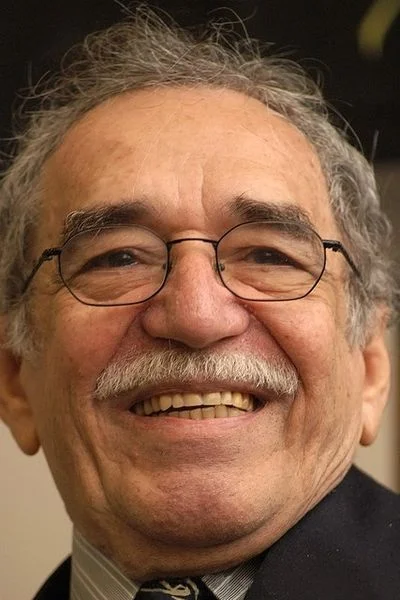
Gabriel José de la Concordia García Márquez was born in a small Caribbean coastal town. Raised by his maternal grandparents while his parents sought work elsewhere, he absorbed the folk tales, myths, and magical thinking that would transform Latin American literature.
The death of his grandfather Colonel Nicolás Márquez, a Liberal War veteran who had filled young Gabriel's head with war stories and wonder, ended his enchanted childhood. His grandmother's matter-of-fact way of telling supernatural tales became the basis of his narrative style.
García Márquez won a scholarship to study in Bogotá's cold highlands, far from his tropical home. The cultural shock of moving from Caribbean warmth to Andean formality deepened his sense of Colombia's regional divisions and his identification with the coast.
García Márquez enrolled in law school but spent more time writing than studying. After the assassination of Liberal leader Jorge Eliécer Gaitán sparked riots that burned much of Bogotá, he transferred to Cartagena and began working as a journalist.
García Márquez began his journalism career at El Universal in Cartagena, developing the clear, direct prose style that would distinguish his fiction. Journalism taught him to write under pressure and to find stories in ordinary life.
García Márquez published his first novel, introducing the fictional town of Macondo that would become central to his major works. The book drew on his childhood memories and family history while experimenting with Faulknerian narrative techniques.
As a journalist for El Espectador, García Márquez serialized the true story of a navy sailor who survived ten days adrift at sea. The story embarrassed the Colombian government and forced García Márquez into European exile when the newspaper was closed.
García Márquez married Mercedes Barcha, whom he had known since childhood and to whom he had proposed when she was thirteen. She would become his essential partner, managing their household and protecting his writing time throughout their lives together.
García Márquez worked for Prensa Latina, Cuba's official news agency, in Bogotá, Havana, and New York. His sympathy for the Cuban Revolution began a lifelong friendship with Fidel Castro that drew both admiration and criticism.
Driving his family to Acapulco, García Márquez suddenly saw his long-planned novel complete in his mind. He turned the car around, told Mercedes he needed eighteen months of solitude, and began writing 'One Hundred Years of Solitude.'
García Márquez's masterpiece appeared and immediately revolutionized Latin American literature. The chronicle of the Buendía family in Macondo combined family saga with political history, myth with reality, creating the defining work of magical realism.
García Márquez's experimental novel portrayed a Caribbean dictator's interminable reign through labyrinthine sentences and multiple perspectives. Written during years of political exile and investigation of Latin American tyranny, it deepened his exploration of power.
García Márquez published this novella based on a real murder in his hometown decades earlier. The book examined how an entire town's knowledge of an impending crime failed to prevent it, exploring collective guilt and the nature of fate.
García Márquez received the Nobel Prize for 'his novels and short stories, in which the fantastic and the realistic are combined in a richly composed world of imagination.' He accepted in a white liqui-liqui suit and delivered a speech titled 'The Solitude of Latin America.'
García Márquez published his romantic epic spanning fifty years of obsessive love. Based partly on his parents' courtship, the novel celebrated love's persistence against time and death, proving he could master straightforward narrative as brilliantly as magical realism.
García Márquez was diagnosed with cancer, forcing him to slow his writing. Though he would live fifteen more years, his literary output declined as he focused on completing his memoirs and spending time with family.
García Márquez died of pneumonia complicated by other infections. His passing was mourned worldwide as the loss of one of literature's greatest voices. He had transformed the way stories are told and brought Latin American experience to global consciousness.