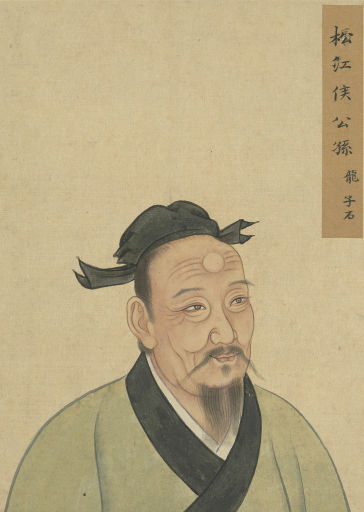
Quick Facts
A razor-sharp logician who challenged common sense with paradoxes, shaping debates on language, logic, and reality.
Conversation Starters
Life Journey
Born as interstate rivalry fueled intense philosophical competition across northern China. The era’s courts patronized persuaders and specialists who could sharpen policy with argument and wit.
As a youth he studied classical language and persuasive speaking used by traveling advisers. Teachers emphasized precise wording, analogies, and courtroom-style refutation suited to elite debates.
He gravitated toward Mingjia thinkers who analyzed how words pick out things and categories. Discussions focused on whether correct naming could stabilize law, ritual, and political order.
He began appearing in high-stakes disputations where status depended on logical agility. Rival persuaders tested him with tricky definitions, and he answered with tight distinctions and paradox.
He is later associated with the Zhao aristocrat Lord Pingyuan, famed for hosting learned retainers. The court valued dazzling argument as a diplomatic tool in negotiations among rival states.
He developed the claim that “a white horse is not a horse,” separating color-qualified kinds from broader categories. The puzzle forced listeners to confront ambiguity in classification and naming practices.
Court audiences saw how small shifts in wording could change obligations and outcomes. His demonstrations suggested that governance depended on stable terms, yet real speech often slid between meanings.
Mohists and Confucians criticized clever disputation as detached from moral cultivation and statecraft. He defended analysis of names as essential for clear commands, contracts, and judgments in court.
He explored whether properties like hardness and whiteness imply different things or one object described two ways. These arguments anticipated later concerns about predication, parts, and feature attribution.
Younger disputers gathered to learn his techniques of definition, substitution, and controlled ambiguity. They practiced short dialogue forms designed for performance in courts and diplomatic receptions.
As Qin expanded, courts sought sharper arguments for alliances and deterrence. His style of precise distinctions suited envoys who needed to exploit wording in treaties and public proclamations.
After devastating campaigns such as Changping, the political map forced rethinking of strategy and persuasion. Debaters like him became tools for salvaging prestige and negotiating terms under pressure.
Material later associated with the Gongsun Longzi circulated in compact argumentative pieces. Their crafted exchanges preserved courtroom rhythm while presenting problems of reference, kind terms, and sameness.
Many thinkers warned that disputation could undermine trust and moral norms by rewarding verbal tricks. He increasingly framed his work as clarification of terms rather than mere victory in debate.
As Zhao struggled against Qin, retainers and scholars dispersed to safer courts. His paradoxes remained memorable teaching devices, repeated by rivals and preserved through citation and critique.
In old age he focused on tightening premises, anticipating objections, and crafting clearer analogies. The goal was to show how everyday words hide shifting boundaries that confuse judgment and policy.
He died as the Warring States approached its final century of consolidation under Qin. Later scholars remembered him as a master of paradox whose work exposed tensions between language and reality.