Quick Facts
A brilliant and politically shrewd consort who reshaped Ottoman court power through diplomacy, patronage, and strategic alliances.
Conversation Starters
Life Journey
She was likely born in the region of Ruthenia, often associated with Rohatyn in todayâs western Ukraine. Later Ottoman and European sources called her Roxelana, reflecting her Eastern Slavic origins and the eraâs shifting frontiers.
During raids linked to the Crimean Khanateâs slave trade, she was seized and transported through Black Sea routes. She was sold in an Ottoman market and eventually entered the imperial household system that supplied the palace harem.
She was brought to Istanbul and trained in palace protocols, language, etiquette, and Islam within the harem structure. Her intelligence and lively temperament earned her the nickname âHĂŒrrem,â meaning âthe joyful one,â in Ottoman usage.
Soon after Suleimanâs accession, she drew his attention and became a prominent consort in Topkapi Palace. Her rise disrupted established harem hierarchies and intensified court rivalries, especially around succession politics.
The birth of Prince Mehmed made her a central figure in the dynastic future of the House of Osman. Court factions recalculated alliances as her children became potential heirs in an empire where succession was contested and dangerous.
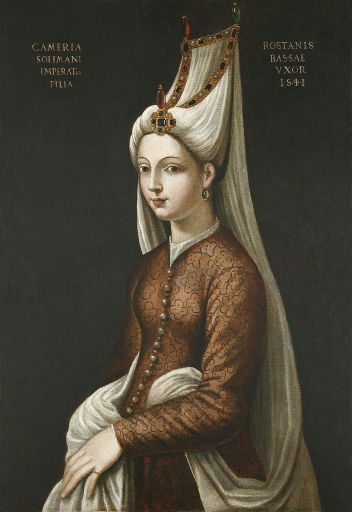
Mihrimah Sultanâs birth added a powerful dynastic link that later shaped high politics through marriage and patronage. Mother and daughter would become closely associated with architectural endowments and elite networks in Istanbul.
Prince Selimâs arrival expanded her stake in the imperial succession alongside Suleimanâs older son, Ćehzade Mustafa. Rival households within the palace increasingly framed politics around competing princes and their mothersâ alliances.
With another son, her household grew in prestige and resources, attracting administrators and tutors tied to the princesâ education. The courtâs long-term stability depended on balancing these competing dynastic lines without provoking civil conflict.
As Suleiman fought in Central Europe, culminating in victory at MohĂĄcs, the palace became a hub of messaging and patronage. HĂŒrrem learned how war, finance, and foreign alliances shaped decisions that reached deep into the haremâs politics.
Prince Cihangir, remembered for fragile health, became emotionally significant within the dynasty and later court narratives. His presence affected household priorities and reinforced HĂŒrremâs role as the mother of a large, politically important family.
Suleiman formally married HĂŒrrem, a rare step for an Ottoman sultan and a clear sign of exceptional favor. The marriage elevated her to an unprecedented status and changed how diplomats and officials interpreted access and influence at court.
With the title Haseki Sultan, she commanded significant stipends and administrative reach within the palace. She built networks among eunuchs, scribes, and charitable administrators, ensuring her influence extended beyond private apartments into state affairs.
Suleiman ordered the execution of his longtime friend and grand vizier Pargalı Ibrahim Pasha, reshaping elite politics overnight. Though motives remain debated, the shift benefited factions closer to HĂŒrrem and altered the balance of power in Istanbul.
She endowed public charities in Istanbul, supporting a mosque, soup kitchen, and hospital associated with the Haseki Sultan Complex. These foundations, designed within the Ottoman architectural tradition and later linked to Mimar Sinanâs circle, projected legitimacy and care for subjects.
HĂŒrremâs letters and diplomatic gestures reached beyond the palace, including contacts associated with the Polish-Lithuanian realm. By blending personal appeals with political calculation, she helped maintain channels that complemented Suleimanâs military and treaty strategy.
Mihrimah Sultan married RĂŒstem Pasha, who rose to grand vizier, creating a formidable political bloc tied to HĂŒrremâs household. The alliance strengthened her position during succession tensions and connected harem influence to the empireâs highest administrative office.
During the Persian campaign, Ćehzade Mustafa was executed on Suleimanâs orders, a turning point in Ottoman dynastic politics. Contemporary observers linked the event to court intrigue involving RĂŒstem Pasha and HĂŒrrem, though definitive responsibility remains contested by historians.
HĂŒrrem died after decades at the center of Ottoman power and was buried near Suleimanâs complex at the SĂŒleymaniye precinct. Her tomb and endowments reinforced her image as both a political actor and a patron of public welfare in the imperial capital.