Quick Facts
Bold Momoyama-to-Edo painter who fused Kano grandeur with Kyoto elegance, shaping monumental screen and temple murals.
Conversation Starters
Life Journey
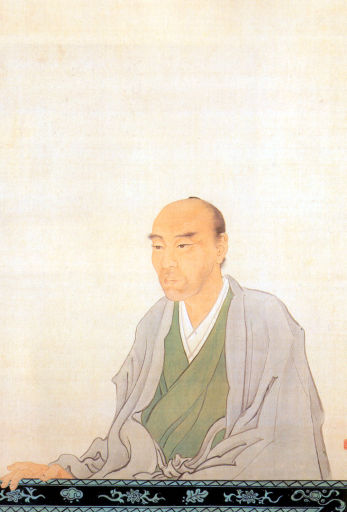
Born in Omi Province as Kimura Heizaburo, he grew up amid warfare and castle-building that demanded grand visual culture. The turbulent Sengoku climate later shaped his taste for dramatic scale, gold grounds, and bold composition.
As a youth, he likely encountered the thriving arts market that served merchants and military households near Lake Biwa. This environment rewarded painters who could deliver impactful imagery for screens, halls, and receptions with speed and authority.
He gravitated toward Kyoto, where temples, court nobility, and rising warlords competed for cultural prestige. Access to urban workshops and materials prepared him for the professional discipline expected of major decorative painters.
He entered the orbit of the Kano school when its leaders were supplying paintings for the new unifiers of Japan. Rigorous copying practice, ink control, and compositional planning trained him to execute large programs under strict deadlines.
Kano Eitoku adopted him, elevating his status from outsider to heir within an elite atelier. The adoption connected him to Eitoku’s patrons and methods, including monumental brushwork, gold-leaf fields, and theatrical pictorial staging.
He contributed to major decorative projects associated with the Momoyama taste for splendor and authority. Workshop collaboration taught him how to coordinate assistants, transfer designs efficiently, and maintain consistent style across vast surfaces.
Through intensive production, he mastered the handling of mineral pigments, ink, and gold leaf used in byobu and fusuma painting. The luminous grounds amplified motifs like pines, plum, and birds, making them readable in dim interiors.
After Kano Eitoku died, Sanraku stepped into a more visible leadership role within the workshop lineage. He had to preserve Eitoku’s prestige while proving his own authority to patrons who demanded continuity and innovation.
Toyotomi Hideyoshi’s death reshuffled elite sponsorship and the cultural politics of Kyoto. Sanraku adapted by strengthening ties with temples and courtly circles, ensuring steady commissions despite the shifting military balance.
Following the Battle of Sekigahara, Tokugawa authority expanded and artistic patronage realigned toward Edo power structures. In Kyoto, Sanraku positioned his work as indispensable to temples and aristocrats, preserving Kyoto’s cultural centrality.
By the early Edo period he was recognized as a principal Kano master in Kyoto, distinct from Edo-based lineages. His paintings balanced Kano boldness with Kyoto refinement, appealing to clergy and court patrons seeking dignified grandeur.
He executed large-scale wall and sliding-door paintings for prominent Zen temple complexes. These commissions required iconographic sensitivity, harmonizing seasonal nature motifs with meditative spaces used for ritual, instruction, and elite reception.
With demand rising, he organized an atelier capable of delivering coordinated sets of screens and fusuma panels. Apprentices learned standardized drawing routines and brush vocabularies, enabling consistent quality while preserving Sanraku’s signature rhythm.
Sanraku’s Kyoto reputation was reinforced through commissions connected to Nanzen-ji and its networks of subtemples. Working with abbots and administrators, he tailored imagery to architectural sightlines and the ceremonial flow of temple spaces.
He contributed to painting projects linked to Myoshin-ji, a major Rinzai Zen center with influential patrons. Such work demanded both decorative brilliance and restraint, aligning Kano idioms with the austere authority of Zen leadership.
He adopted Kano Sansetsu, consolidating continuity for the Kyoto Kano lineage and securing the workshop’s future. Through mentorship and shared commissions, he transmitted compositional formulas and an approach that blended power with elegance.
In later years he focused on refining motifs and ensuring that major temple cycles retained coherence across generations. His mature style emphasized confident ink structure, luminous color passages, and dignified spacing suited to monumental interiors.
He died in Kyoto after decades of defining the Kyoto branch of Kano painting at the start of the Edo period. His workshop model and temple commissions helped set standards for grand decorative painting across elite and religious spaces.