Quick Facts
A fiercely introspective Japanese painter who fused Western realism with spiritual intensity and modern Taisho-era sensibility.
Conversation Starters
Life Journey
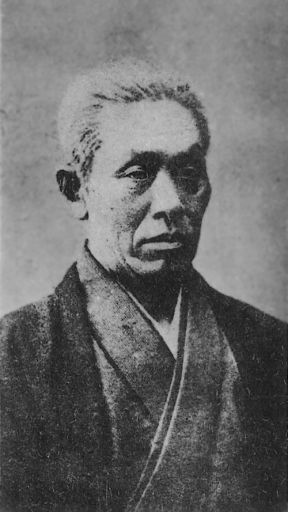
Born as Kishida Ryusei in Tokyo as Japan accelerated industrial and cultural reforms in the Meiji era. Growing up amid new schools, printing, and imported ideas helped form his early fascination with pictures and literature.
As a teenager he pursued painting with unusual discipline, studying drawing and oil techniques associated with yōga, Japan’s Western-style art. He gravitated toward Tokyo’s exhibitions and journals, where debates about modern art were intensifying.
Reproductions and commentary on Vincent van Gogh electrified him, convincing him that emotion and facture could carry spiritual weight. He experimented with forceful brushwork and saturated color, aligning with the era’s broader fascination with European modernism.
He began writing art criticism that defended seriousness and sincerity against decorative convention in Japanese painting. His essays in Tokyo’s magazines helped shape how young artists discussed European movements, technique, and artistic purpose.
With the start of the Taishō period, Tokyo’s cultural scene widened, mixing literature, theater, and new visual styles. He pursued a personal ideal of “truth” in painting, pushing beyond fashion toward a more inward, moralized realism.
Dissatisfied with mere expressive surface, he studied European Renaissance and Northern masters through books and reproductions. He adopted tight modeling, careful edges, and symbolic clarity, seeking a realism that felt both physical and spiritual.
He married and tried to balance domestic responsibilities with relentless studio work in Tokyo. Family life became intertwined with his practice, eventually providing the intimate setting for his most famous portraits and still lifes.
His daughter Reiko was born, and she soon became the central motif of his portrait experiments. Painting her allowed him to test extreme precision, psychological presence, and the moral seriousness he associated with European old masters.
He started portraying Reiko in frontal, meticulous compositions, emphasizing skin tones, gaze, and texture. The works challenged prevailing tastes in Japan by combining intimate subject matter with an almost confrontational, classical exactness.
Portraits and still lifes began circulating through exhibitions and printed media, bringing his distinctive realism to a broader audience. Viewers debated whether his precision felt unsettling or profound, and that controversy strengthened his reputation.
He painted fruits, vessels, and everyday objects with an obsessive attention to surface, weight, and light. These works used humble subjects to explore perception and inner meaning, echoing Northern European traditions while remaining distinctly modern.
He wrote forcefully about what painting should do in a changing society, arguing for integrity over trend. His criticism influenced younger yōga painters and fueled arguments in Tokyo about realism, modernism, and Japanese identity.
While maintaining careful observation, he also tried flatter shapes and clearer outlines, searching for a new balance between structure and immediacy. The shift reflected both personal restlessness and the broader Taishō search for modern visual language.
The Great Kantō Earthquake devastated Tokyo and Yokohama, shattering studios, galleries, and publishing networks. Amid the upheaval, he confronted impermanence directly and continued working as artists rebuilt communities and institutions from ruins.
Later portraits of Reiko emphasized quieter mood and psychological distance rather than sheer optical exactness. The evolving series documented both an artist’s shifting ideals and a child’s growth, turning private family time into modern art history.
As the Shōwa era began, he worked in a mature mode that fused learned realism with selective simplification. His paintings and essays continued to circulate in Tokyo, even as mass culture and politics increasingly reshaped artistic life.
Persistent health problems intensified, but he kept painting and writing with little compromise. Friends and colleagues worried about exhaustion, yet he remained driven to complete works that met his exacting standards of presence and truth.
He died at only thirty-eight, cutting short a career that had already reshaped Japanese portraiture and still life. Posthumous exhibitions and scholarship in Japan cemented him as a key figure bridging European realism and Taishō modernity.