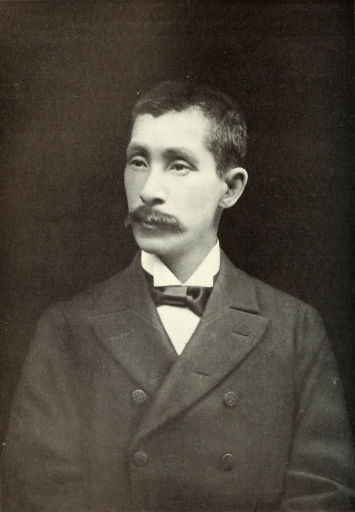
Quick Facts
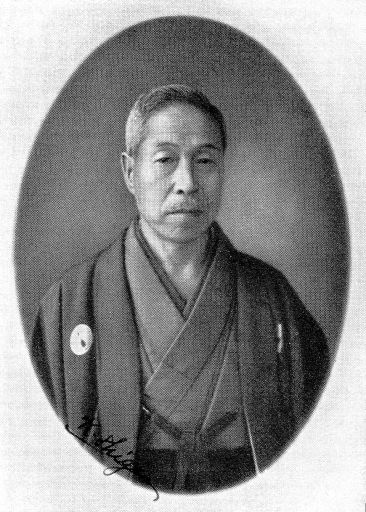
A meticulous Meiji diplomat who rewired Japan’s treaty system and steered wartime negotiations onto the world stage.
Conversation Starters
Life Journey
Born into a samurai family in the Obi domain as Tokutaro Komura during the late Tokugawa era. Growing up in rural Hyuga, he witnessed the pressures of Western encroachment that soon reshaped Japan’s politics.
As the Meiji Restoration dismantled the domain system, he experienced the collapse of samurai status and the rise of a centralized state. The turbulent transition pushed ambitious youth like him toward modern schooling and government service.
He left provincial Kyushu for Tokyo to pursue advanced studies, focusing on English and Western legal ideas. This move placed him near new Meiji institutions that were recruiting talent for diplomacy and law.
He trained in modern jurisprudence at a time when Japan was building courts and codes modeled on Europe and America. The practical goal was national sovereignty: ending extraterritoriality and rewriting unequal treaties through legal credibility.
While Saigo Takamori’s rebellion tested the Meiji state, Komura continued his studies and watched the government consolidate authority. The conflict underscored for him how internal stability and international recognition were tightly linked.
He traveled to America to learn English-language law and diplomacy at close range, absorbing U.S. political culture and negotiation habits. The experience strengthened his confidence that Japan could meet Western standards on their own terms.
He completed legal study at Harvard, a rare credential for a Japanese official of the era. Equipped with comparative legal knowledge, he returned determined to use law as a tool for treaty revision and statecraft.
Entering the Foreign Ministry, he applied his English and legal training to consular and diplomatic work. Japan’s key objective was to be treated as an equal power, requiring careful engagement with Western capitals and their legal norms.
In Washington, D.C., he handled negotiations and political reporting during a period of expanding U.S. interest in the Pacific. He cultivated a reputation for detailed preparation and firm language, traits that later defined his ministerial style.
After Japan’s victory over Qing China, Russia, Germany, and France forced Japan to return the Liaodong Peninsula in the Triple Intervention. The humiliation intensified his resolve to secure alliances and legal standing to prevent future coercion.
He became Foreign Minister under Prime Minister Katsura Taro, taking charge as Japan sought security against Russian expansion in Manchuria and Korea. His approach emphasized disciplined drafting, secrecy, and alignment with major-power realities.
With the Anglo-Japanese Alliance reshaping East Asian balance-of-power politics, he worked to keep Britain engaged as a strategic counterweight. The alliance gave Japan diplomatic leverage and reduced the risk of multi-power intervention in future conflicts.
As war broke out with Russia, he coordinated messaging to Western governments to frame Japan as a responsible, lawful belligerent. He balanced military aims with the financial and diplomatic limits of a modern industrial war.
At Portsmouth, New Hampshire, he negotiated with Sergei Witte under U.S. mediation by President Theodore Roosevelt. He secured recognition of Japan’s position in Korea and key rights in southern Manchuria, while limiting demands to what Russia might accept.
Despite diplomatic gains, the absence of a large indemnity inflamed public expectations and triggered the Hibiya incendiary riots in Tokyo. He became a lightning rod for anger, illustrating the new force of mass politics in Meiji Japan.
In the aftermath of victory, he helped formalize arrangements that expanded Japan’s influence in Korea and secured rail and leasehold interests in southern Manchuria. His diplomacy aimed to convert battlefield outcomes into internationally recognized legal instruments.
Reappointed Foreign Minister, he dealt with shifting relations among Russia, Britain, and the United States as competition in Northeast Asia persisted. He pursued pragmatic agreements to reduce diplomatic isolation while protecting Japan’s strategic gains.
He died in the final phase of the Meiji period, after helping redefine Japan’s external posture through treaty-making and alliance politics. His legacy remained controversial: admired for precision and results, criticized for hard compromises and elite secrecy.