Quick Facts
Protestant Ethic. Iron Cage. Sociology's founding father who explained how ideas shape economies.
Conversation Starters
Life Journey
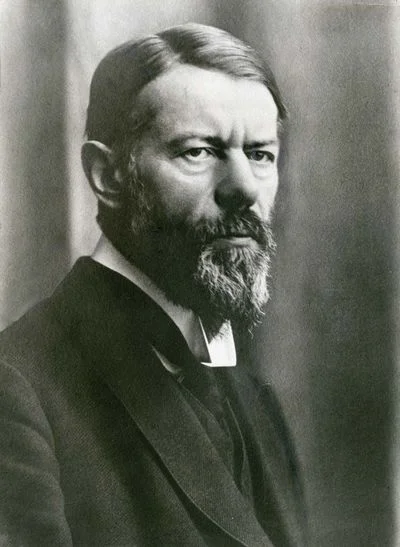
Maximilian Karl Emil Weber was born to a wealthy, politically connected family. He would become one of the founders of modern sociology.
Began studying law at Heidelberg while also taking courses in economics, history, and philosophy. He joined his father's dueling fraternity.
Completed his doctoral thesis on medieval trading companies. His scholarship already showed remarkable breadth.
Appointed professor of economics at the University of Berlin. He was also newly married to Marianne Schnitger.
Appointed professor of economics at the University of Freiburg. His inaugural lecture on national economics caused controversy.
Suffered a severe mental breakdown after a confrontation with his father, who died shortly afterward. He could not work for years.
Resumed scholarly work, becoming an associate editor of a major sociology journal. He never returned to regular teaching.
Published 'The Protestant Ethic and the Spirit of Capitalism,' arguing that Calvinist beliefs shaped modern capitalism. It became one of sociology's foundational texts.
Co-founded the German Sociological Association. He was establishing sociology as a distinct academic discipline.
Elaborated his method of interpretive understanding (verstehen), arguing that social science must understand the meaning actors give to their actions.
Initially supported the war and served as a reserve officer directing hospitals. He later became critical of German war leadership.
Advised on the drafting of the Weimar Constitution after Germany's defeat. His concepts of bureaucracy and legitimate domination influenced the design.
Accepted a professorship at Munich and gave his famous lectures 'Science as a Vocation' and 'Politics as a Vocation.'
Died of pneumonia in Munich, leaving 'Economy and Society' unfinished. His concepts of bureaucracy, authority, rationalization, and the 'iron cage' of modernity remain central to social science.