Quick Facts
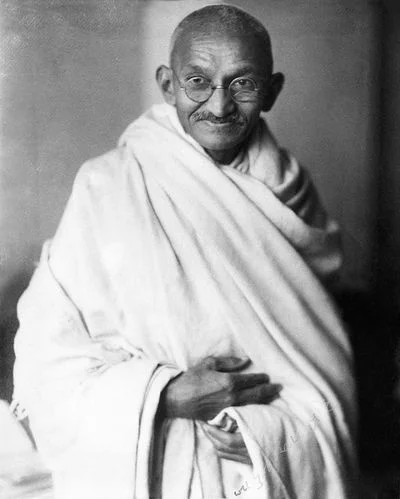
Be the change": Gandhi, nonviolent leader, freed India.
Conversation Starters
Life Journey
Mohandas Karamchand Gandhi was born into a Hindu merchant caste family. His father was the diwan (chief minister) of Porbandar. He would become the leader of Indian independence.
Married Kasturba Makhanji in an arranged child marriage. Despite this early marriage, they developed a deep partnership that lasted until her death.
Traveled to London to study law at University College London. He struggled with English customs but eventually passed the bar examination.
Returned to India as a qualified barrister. He struggled to establish a law practice in Bombay due to his shyness in courtrooms.
Traveled to South Africa on a legal contract. His experiences of racial discrimination there would transform him into a civil rights activist.
Was forcibly removed from a first-class train compartment because of his skin color. This humiliating experience became a turning point in his life.
Coined the term 'Satyagraha' (truth-force) for his philosophy of nonviolent resistance. This would become his primary weapon against injustice.
Returned to India after 21 years in South Africa. He was already famous for his civil rights work and soon joined the Indian independence movement.
Organized nationwide satyagraha against the repressive Rowlatt Act. The Jallianwala Bagh massacre strengthened his resolve for independence.
Launched the Non-Cooperation Movement urging Indians to boycott British goods, institutions, and honors. He became the undisputed leader of the independence movement.
Led the famous Salt March, walking 240 miles to make salt from seawater in defiance of British salt taxes. This act of civil disobedience inspired millions.
Traveled to London as the sole representative of Congress at the Round Table Conference. Though unsuccessful, he gained international recognition.
Launched the Quit India Movement demanding immediate British withdrawal. He was arrested and imprisoned until 1944.
India gained independence on August 15, 1947. However, Gandhi was heartbroken by the partition and communal violence that accompanied it.
Assassinated by a Hindu nationalist while walking to a prayer meeting. Known as the Mahatma (Great Soul), his philosophy of nonviolent resistance influenced civil rights movements worldwide.