Quick Facts
Akkadian emperor who claimed divinity, expanded Mesopotamian power, and left a bold legacy of conquest and controversy.
Conversation Starters
Life Journey
Born into the dynasty founded by Sargon of Akkad, he inherited a court steeped in military expansion and temple politics. Early life likely unfolded in the capital region around Agade, where scribes, soldiers, and priests shaped royal ideology.
As a prince, he would have learned Akkadian and Sumerian scribal practice, diplomacy, and ritual obligations to major gods. The empire’s constant campaigning exposed him to logistics, garrisons, and the management of conquered city-states.
He became king after the reign of Manishtushu, taking control of an empire spanning Sumer and parts of Syria. Royal inscriptions emphasize continuity with Sargon while signaling a more explicit, centralized imperial authority from the Akkadian court.
Several southern cities resisted Akkadian rule, forcing rapid deployments to reassert control over Uruk, Ur, and neighboring centers. By installing loyal governors and enforcing tribute, he tightened the imperial grip over temple economies and canals.
Imperial management relied on appointed officials, standardized accounting, and military colonies placed near strategic routes. Records and later summaries suggest intensified oversight of labor, grain storage, and transport to support long-distance warfare.
Northern expeditions aimed to secure trade arteries and prevent rival coalitions from threatening the empire’s heartland. The court’s messaging framed these wars as restoring order, compelling distant rulers to send gifts, hostages, and tribute.
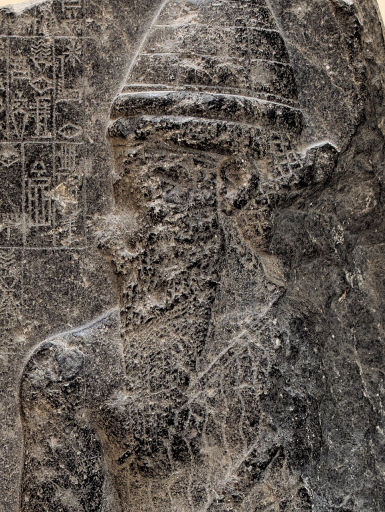
Campaigns against mountain peoples, including the Lullubi, showcased the army’s ability to fight beyond the plains. The famous Victory Stele depicts him ascending a mountain under divine symbols, presenting conquest as cosmic legitimacy.
The stele’s imagery breaks older artistic conventions by placing the king larger than all others and under celestial emblems. It communicated intimidation and order to subjects and rivals, turning battlefield success into a permanent political message.
He is among the earliest Mesopotamian rulers to present himself as a god, adopting the divine determinative in inscriptions. This shift elevated the monarchy above city cults, linking imperial obedience to a sacral, universal authority.
Royal policy balanced patronage with control, funding offerings while limiting independent temple power in key cities. By embedding officials in sacred institutions, the court could monitor wealth, labor obligations, and politically sensitive rituals.
Imperial reach depended on fear, alliances, and repeated demonstrations of force at rebellious frontiers. Vassals were pressured to deliver grain, metals, and manpower, while messengers and scribes carried the king’s orders between cities.
Even after victories, the empire required constant suppression of local coalitions that resented taxation and garrisons. Later Mesopotamian traditions remembered these years as a time when royal hubris and hardship strained divine favor.
Military architecture and stationed troops helped protect river traffic and caravan corridors carrying grain and silver. Control of chokepoints reduced raids and made it harder for distant provinces to break away from Akkadian oversight.
Texts such as later legendary narratives portray him as a ruler who offended the gods and brought calamity on the land. These stories reflect political memory after the empire’s decline, using his reign to debate kingship and piety.
His death ended one of the Akkadian Empire’s most assertive reigns, leaving successors to manage fragile loyalties and external pressure. The imperial model he intensified—divine monarchy, garrisons, and tribute—shaped Mesopotamian rulership for centuries.
His successor Shar-Kali-Sharri inherited an overstretched empire facing revolts and growing frontier instability. Later historians and scribes contrasted the grandeur of Naram-Sin’s victories with the vulnerability that followed his centralized ambitions.