Quick Facts
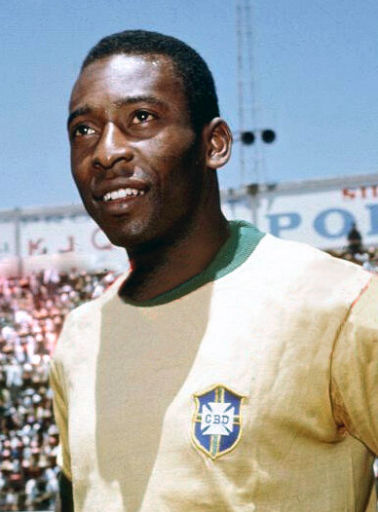
A dazzling Brazilian football icon whose goals, charisma, and sportsmanship made him a global symbol of the beautiful game.
Conversation Starters
Life Journey
Born in Três Corações, Minas Gerais, to João Ramos do Nascimento (“Dondinho”) and Celeste Arantes. Growing up in modest circumstances, he absorbed football culture and family encouragement in wartime-era Brazil.
In Bauru, São Paulo state, he developed quickly in local youth football and futsal. Mentors and older players noticed his balance and finishing, helping him refine technique despite limited resources.
Former player Waldemar de Brito brought the teenager to Santos FC and urged directors to sign him. The move to the coastal club placed him in Brazil’s professional spotlight and accelerated his elite development.
He debuted for Santos and scored, immediately signaling rare composure in front of goal. Coaches began building attacks around his movement and instinctive finishing in São Paulo’s top state competition.
Selected for Brazil, he scored against Argentina in the Copa Roca, becoming the youngest Brazilian to score internationally. The match in Rio de Janeiro introduced him to intense rivalry pressure and national expectations.
At the 1958 World Cup, he starred alongside Garrincha and helped Brazil win its first title under coach Vicente Feola. He scored a hat-trick versus France and two in the final against Sweden, stunning Europe.
Santos toured Europe, Africa, and the Americas, drawing massive crowds for his artistry and goals. These tours helped transform club football into a worldwide spectacle and made him an early global sports celebrity.
Santos captured the Copa Libertadores, then beat Benfica in the Intercontinental Cup, facing Eusébio’s European champions. His performance in Lisbon and São Paulo cemented Santos as the era’s premier club side.
Brazil won the 1962 World Cup in Chile, with the squad rallying after he was injured early. Garrincha carried many matches, but the team’s depth and identity as champions grew around the standard he helped set.
At the 1966 World Cup, repeated heavy tackles limited his impact and Brazil exited in the group stage. The tournament highlighted debates about player protection and officiating as global audiences watched stars targeted.
He scored his 1,000th goal, a penalty for Santos against Vasco da Gama at the Maracanã, sparking nationwide celebration. The milestone became a cultural event in Brazil, linking football achievement with national pride.
Under coach Mário Zagallo, he led a famed team with Jairzinho, Rivellino, Tostão, and Carlos Alberto. Brazil’s stylish victory in Mexico City, capped by the final versus Italy, became a defining football mythos.
He played his last Brazil match in Rio de Janeiro, closing an international career that shaped how modern stars are measured. Fans treated the occasion as a farewell to an era of Brazilian dominance and imagination.
He stepped away from Santos, the club where his partnership with teammates and coaches created a relentless attacking identity. The farewell marked the end of one of football’s most storied single-club eras.
He joined the New York Cosmos in the NASL, bringing global attention to American soccer and drawing celebrities to matches. His presence helped professionalize marketing and youth interest during a crucial growth period.
He won the 1977 Soccer Bowl with the Cosmos and then played an emotional farewell match involving Santos and New York. The event at Giants Stadium showcased his dual legacy, celebrated by fans from two continents.
As Minister of Sports, he promoted policies tied to transparency and athlete welfare amid Brazil’s changing sports economy. The so-called “Lei Pelé” became associated with modernizing contract and club governance debates.
FIFA recognized him as Player of the Century in a joint designation, reflecting his status across eras and continents. The award framed his achievements as foundational to football’s modern global narrative and memory.
He died in São Paulo, prompting national mourning in Brazil and global tributes from clubs, players, and heads of state. Vigils and memorials emphasized how his goals and persona shaped football as shared culture.