Quick Facts
A daring shrine performer who fused dance, satire, and spectacle, sparking the early evolution of kabuki theater.
Conversation Starters
Life Journey
Okuni was born in the Izumo region, where pilgrimage culture and shrine festivals sustained musicians and dancers. Growing up around Izumo Taisha shaped her ear for ritual chant, folk song, and crowd-pleasing spectacle.
As a young woman, she learned kagura-style dance, singing, and accompaniment linked to shrine celebrations. Local patrons and priests valued performers who could draw pilgrims, and her talent began to stand out at public gatherings.
Okuni became associated with efforts to raise funds tied to Izumo Taisha, traveling where donations and audiences were plentiful. These trips exposed her to urban fashions, popular ballads, and comic routines that later colored her stage persona.
Kyoto’s riverbanks and temple precincts offered lively spaces where performers competed for attention. The city’s post-wars consumer culture, tied to merchants and pilgrims, rewarded novelty more than strict ritual tradition.
She staged dances on the Kamo River’s drybed, a flexible venue for crowds, vendors, and itinerant entertainers. Her mix of song, movement, and quick comic beats drew repeat viewers and word-of-mouth attention across the capital.
Okuni linked dance with skits and character play, turning standalone numbers into a more continuous entertainment. She blended refined gestures with street humor, giving common townspeople and visiting pilgrims a shared cultural event.
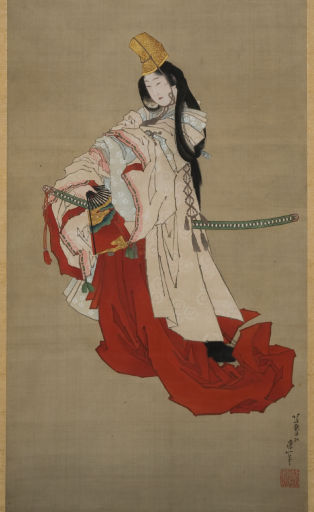
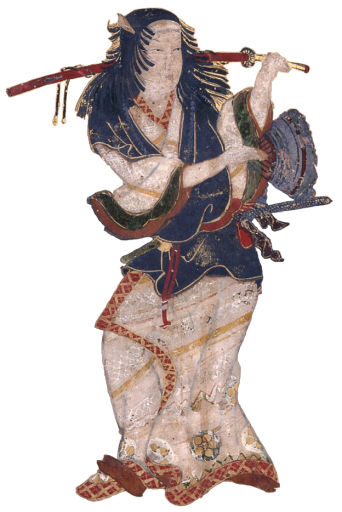
Her best-known acts featured male attire—often a sword and flamboyant costume—echoing fashionable “kabukimono” bravado. The gender-bending roles amplified satire of status and style, and audiences delighted in the audacity and wit.
Okuni gathered skilled women to sing, dance, and act in coordinated ensembles rather than as loose street acts. By coaching timing and character types, she turned individual talent into a troupe identity that could tour and adapt routines.
As Tokugawa authority grew after Sekigahara, Kyoto’s cultural life remained hungry for diversions that felt current and slightly rebellious. Okuni’s performances attracted not only townspeople but also higher-status spectators intrigued by the craze.
Okuni’s fame placed her troupe in settings where powerful patrons and cultured audiences could see her work. These appearances helped fix her reputation as the leading origin figure of a new, crowd-driven dance-drama in Kyoto.
Her repertory increasingly parodied everyday urban worlds—teahouses, flirtations, and market swagger—using recognizable types. By mirroring Kyoto’s rising merchant culture, she made spectators feel seen while still offering escapist glamour.
Rival groups copied “kabuki” dances and stage tricks, spreading the label beyond Okuni’s circle. The rapid imitation shows how quickly her formula—music, dance, comedy, and fashion—became a marketable urban entertainment.
As kabuki grew, performances often overlapped with networks of teahouses and licensed entertainment, drawing scrutiny from authorities. The association with nightlife increased profits and fame, but also heightened moral and political concern.
Later accounts suggest her direct presence faded as newer troupes and managers refined the style for larger crowds. Even as her personal history blurred, the name “Okuni” remained a touchstone for the genre’s origin story.
Growing popularity brought regulation, and later bans on women’s kabuki reshaped the art into new forms. Okuni’s earlier innovations—ensemble spectacle, character play, and fashionable satire—survived as core DNA of kabuki theater.
The details of her final years and exact death date remain uncertain, reflecting how performers were recorded unevenly in early Edo sources. Yet chronicles and later theater histories continued to credit her as kabuki’s catalytic founder.